Collection PL

About 1994.pl
Results for “banknot”
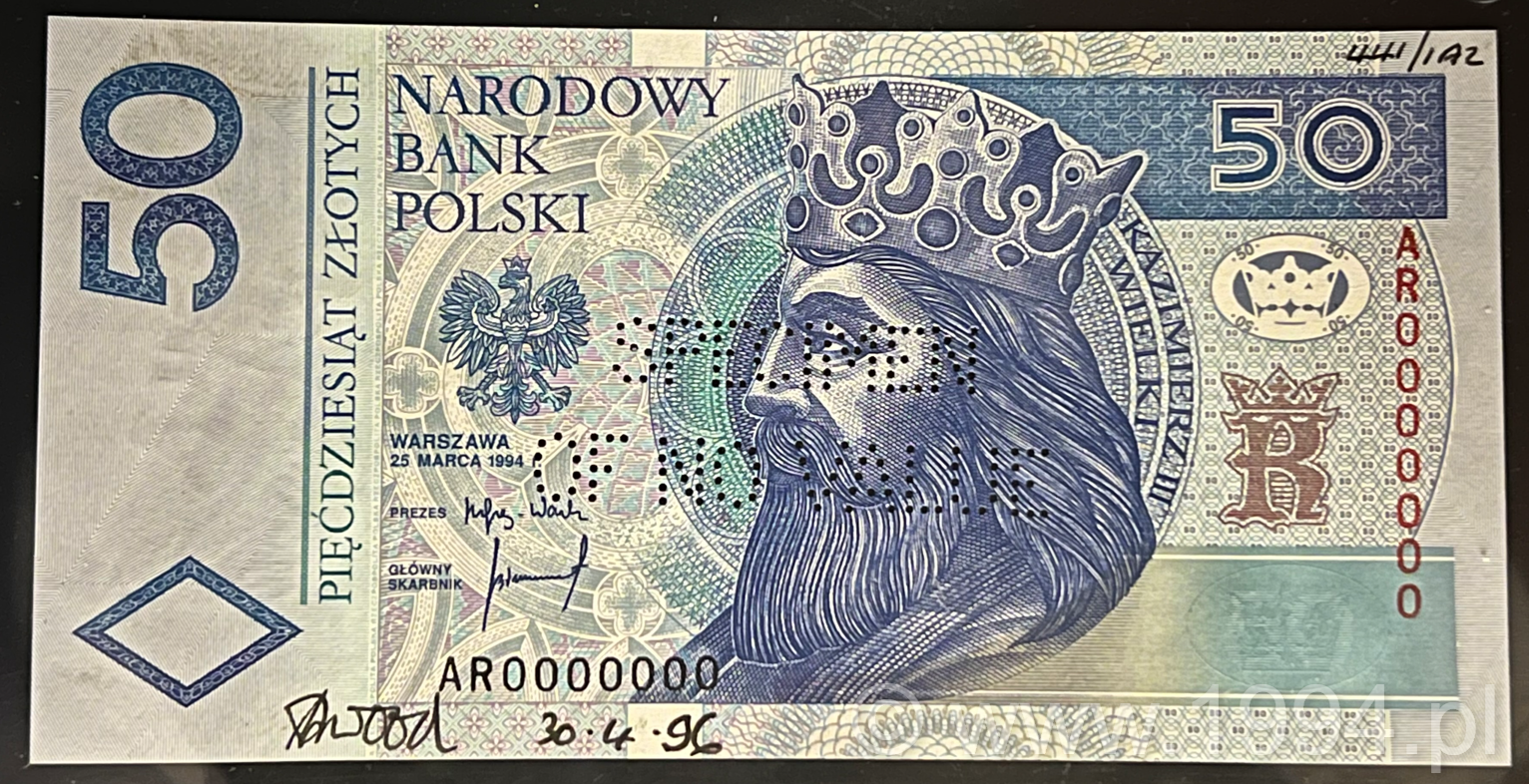
Poland 1994 50 Zlotych discovery AR prefix specimen perforated SPECIMEN OF NO VALUE, serial AR0000000, with handwritten archive date 30.4.96, printer annotations, and Thomas De La Rue production origin.

Poland 1994 - 50 Zlotych Discovery AR Prefix Specimen Perforated SPECIMEN OF NO VALUE (Pick Unlisted)

Discovery AR-prefix perforated specimen of the 50 Zlotych banknote from the 1994 Polish issue, bearing serial number AR0000000 and cancelled by the perforated inscription SPECIMEN OF NO VALUE. This AR-prefix form is unrecorded in Milczak and Pick and belongs to the same discovery-level production group as the related AR approval specimen and AR red-overprint specimen. Read more →

PolandDiscovery AR Prefix Specimen Perforated SPECIMEN OF NO VALUE199450 ZlotychUncirculated SpecimenDiscovery AR PrefixDiscovery PrefixDiscovery MaterialProduction-Stage DiscoveryPerforated SpecimenPerforated SPECIMEN OF NO VALUESpecimen of No ValuePrinter AnnotationsHandwritten Archive Date30.4.96AR PrefixSerial AR0000000Zero Serial NumberThomas De La RueTDLRMilczak UnlistedPick UnlistedMilczak Unlisted AR PrefixPreviously Undocumented AR PrefixAR Prefix Specimen EvidencePhysical Specimen Control FormDe La Rue Archival ControlPoland Currency Redesign 1994National Bank of PolandNarodowy Bank PolskiModern Polish BanknotesSecurity Printing HistorySpecimen Control ProceduresPre Issue Control NotePrinter Control MaterialFinal Issued-Style DesignKing Casimir III the GreatKazimierz WielkiAndrzej HeidrichHanna Gronkiewicz-WaltzWieslaw BiernatowiczPolandPoland 1994199450 ZlotychMuseum GradeR9 Extremely RareUniqueAnnotationsHandwritten Annotations
Held
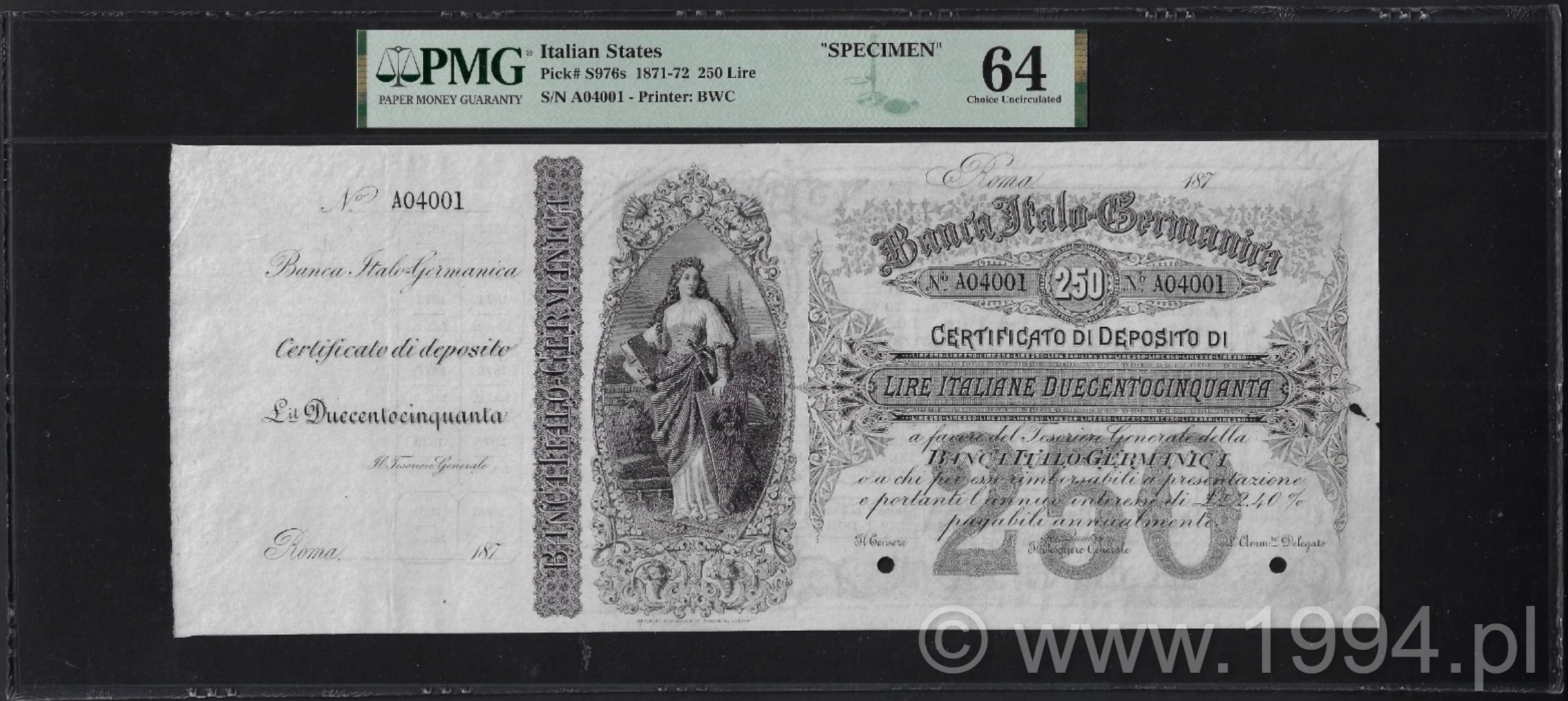
Italy 1871–1872 Banca Italo-Germanica 250 Lire specimen, Pick S976s, Bradbury Wilkinson & Co., PMG 64 Top Pop

Italy 1871–1872 - Banca Italo-Germanica 250 Lire Specimen (Pick S976s)

An exceptional and academically important survival from the experimental phase of Italy’s early post-unification banking era, this 250 Lire specimen from the short-lived Banca Italo-Germanica, cataloged as Pick S976s, represents one of the rarest and most ambitious private note-issuing projects attempted in Rome during the 1870s. No issued examples of this type are known to exist, and all scholarship indicates that the bank’s banknote program collapsed before any notes entered circulation, leaving only a microscopic number of presentation pulls, proofs, or internal printer’s archive sheets. This PMG 64 Choice Uncirculated example is the sole graded specimen in the PMG census, making it both Top Pop and Only Pop. Read more →

ItalySpecimen1871250 LirePMG 64 (Top Pop) Private BankOversizedSpecimenDouble Punch HolePunch Cancelled250 LireEngraved Security PaperProof and Archive PieceBradbury WilkinsonBWCPick S976sItalian StatesPost Unification ItalyItalian Banking HistoryFailed Banknote IssuesGerman Capital in Italy19th Century FinanceNational AllegorySecurity Printing HistoryRome Banking ExperimentsUnissued Banknote ProjectItaly1871PMG 64Top PopR9 Extremely RareUniqueMuseum Grade
Held
Italy 1871 Germania with shield and spear vignette die proof engraved by Bradbury Wilkinson for the Banca Italo-Germanica 250 Lire (Pick PS976)

Italy 1871 - Standing Italia Vignette Die Proof used on Banca Italo-Germanica 250 Lire

This engraved Standing Italia vignette die proof was produced by Bradbury, Wilkinson & Co., London, and is directly connected to the Banca Italo-Germanica 250 Lire specimen of 1871-72, Pick S976, where the same engraving appears as the principal pictorial element within the left-side ornamental panel. The proof preserves the complete vignette as a stand-alone engraved component before its integration into the finished banknote design. Read more →

ItalyVignette1871-Uncirculated Italia AllegoryDie ProofBanca Italo-Germanica250 LireItalian StatesBradbury WilkinsonBWCItaly1871
Held
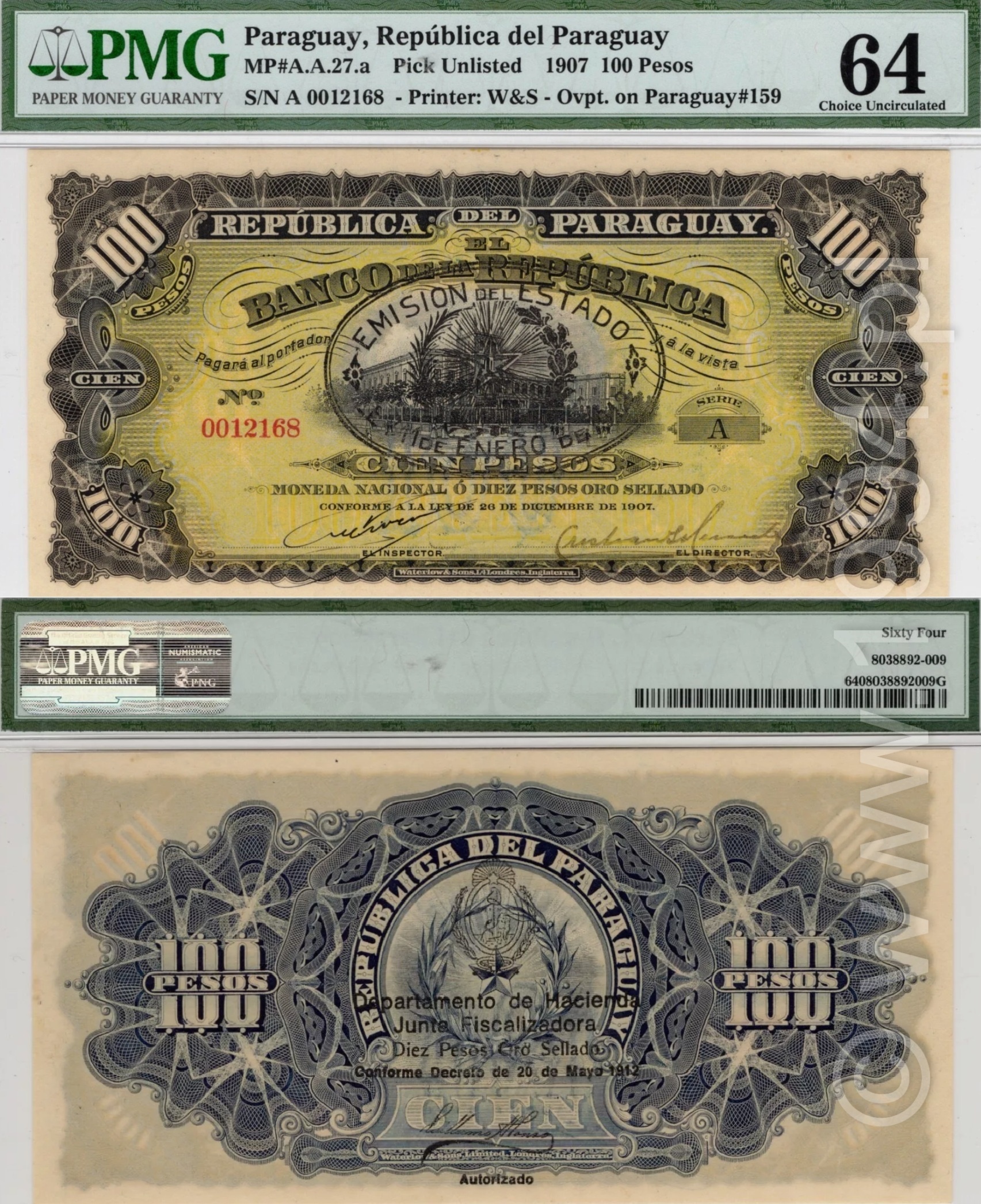
Paraguay 1907 100 Pesos Banco de la República specimen with 1912 dual-side state and treasury fiscal revalidation overprint, including Emisión del Estado on the face and Departamento de Hacienda Junta Fiscalizadora Diez Pesos Oro Sellado validation on the reverse, base Pick 159, Pick Unlisted, PMG 64 Choice Uncirculated

Paraguay 1907 - 100 Pesos with 1912 Dual-Side State and Treasury Revalidation Overprint Specimen (Pick Unlisted)

Within that emergency system, this specimen represents the highest visible level of revalidation: first, the national state emission overprint on the face; second, the Treasury and Junta Fiscalizadora validation on the reverse; and third, the explicit reaffirmation of the ten sealed gold pesos formula. The note therefore records a complete chain of authority. It begins as a 1907 Banco de la República Waterlow & Sons banknote, becomes a January 1912 state-recognized obligation, and is then further confirmed by the Treasury under the May 1912 decree. Few Paraguayan notes of the period show this administrative transition so clearly. Read more →

ParaguayOverprint Specimen1907100 PesosPMG 64 Choice Uncirculated Specimen100 PesosPick UnlistedPick 159OverprintState OverprintTreasury OverprintDual-Side OverprintDual-Signature OverprintProvisionalFiscal RevalidationTreasury RevalidationEmergency State IssueParaguayan Emergency Issues1912 ReformJanuary 11 1912 State EmissionMay 20 1912 DecreeBanco de la RepúblicaDepartamento de HaciendaJunta FiscalizadoraEmisión del EstadoDiez Pesos Oro SelladoGold-Value ReaffirmationWaterlow & SonsSouth American Monetary HistoryEarly 20th Century FinanceGovernment RevalidationOverprint VarietiesParaguay19071912PMG 64Choice UncirculatedMuseum GradeR9 Extremely RareUnique
Held
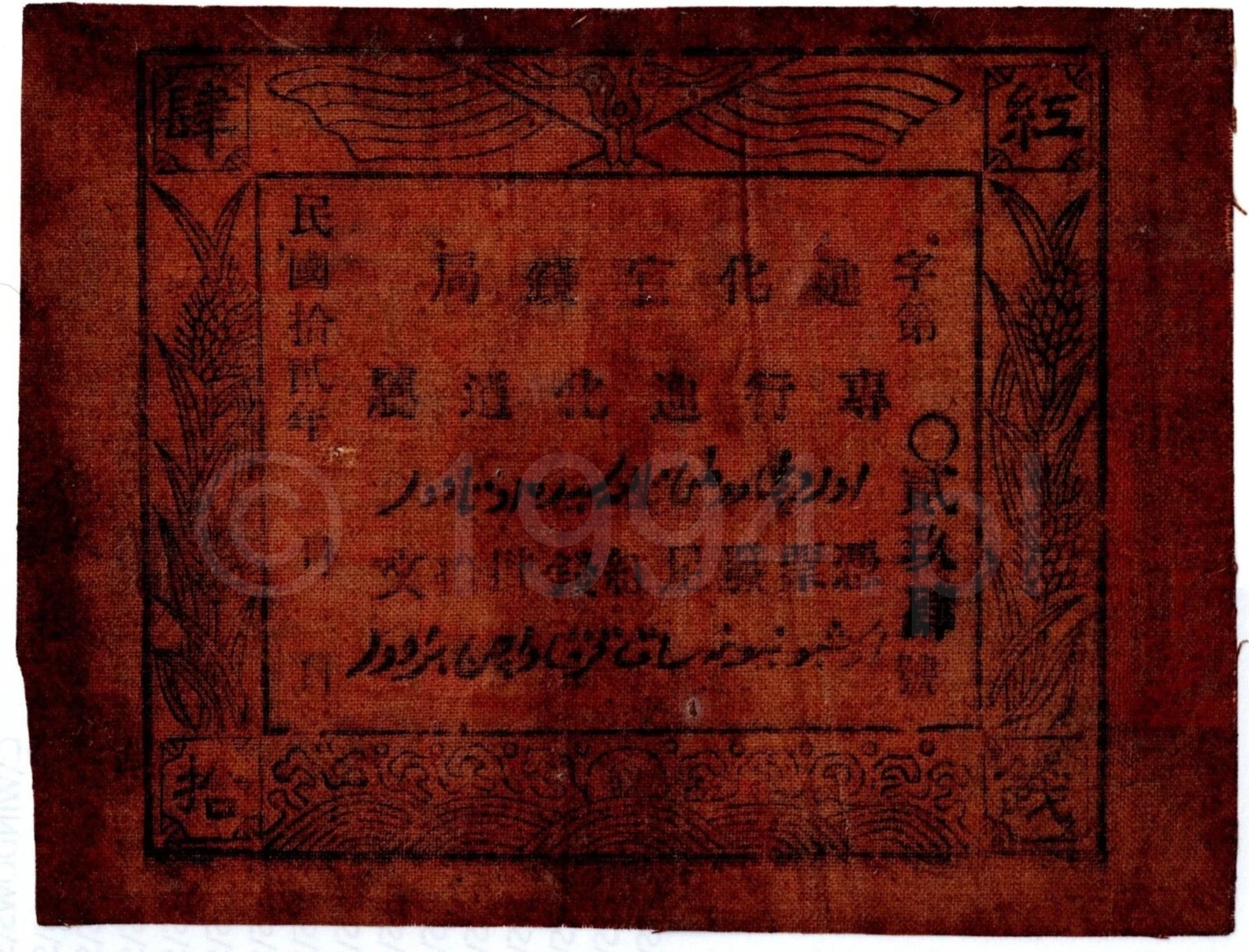
Late Qing Sinkiang textile emergency currency printed on red-dyed cloth using hand-carved woodblocks, circa 1880

China 1880 - Sinkiang Textile Emergency Currency, Cloth Note (Pick Unlisted)

The visual structure is consistent with Qing-era frontier issues. Irregular woodblock borders, asymmetrical ornamental elements, and uneven ink saturation indicate manual block alignment rather than mechanized printing. The calligraphy shows brush-based execution with variable stroke weight and non-standardized character spacing, a feature typical of late Qing administrative production and incompatible with twentieth-century commercial banknote printing. Read more →

ChinaTextile Emergency Currency1880Unknown Local DenominationFine (Textile Issue) Textile BanknoteTextile Emergency CurrencyCloth BanknoteCloth NoteHand-Carved Woodblock PrintingLate Qing Frontier IssueWoodblock PrintingSinkiangChina1880R9 Extremely RareUniqueMuseum GradePick Unlisted
Held
China 1915 South Sinkiang Border Defence Headquarters 1 tael textile emergency banknote printed on woven cloth with red overprint and bilingual inscriptions

China 1915 - South Sinkiang Border Defence Headquarters 1 Tael Textile Emergency Issue (Pick Unlisted)

This 1 tael textile banknote represents a formally authorized military emergency issue produced in 1915 by the South Sinkiang Border Defence Headquarters during a period of severe administrative and monetary fragmentation in western China. Issued within the southern frontier zone encompassing Khotan, Yarkand, and Karghalik, the note reflects a localized system of fiscal control exercised by military authorities operating with substantial autonomy from central government structures. Read more →

ChinaTextile Banknote19151 TaelFine (Textile Issue) Textile BanknoteTextile Emergency CurrencyCloth CurrencyMilitary Emergency Issue1 TaelWoodblock PrintingRed OverprintSouth Sinkiang Border Defence HeadquartersFrontier Military AdministrationRegional Monetary SystemUyghur-Chinese Bilingual IssueCentral Asian Frontier FinanceSecurity Printing HistoryChinaSinkiangSouth Sinkiang1915R9 Extremely RareUniqueMuseum GradePick Unlisted
Held
China 1918 Xinjiang textile emergency currency printed on red cloth by woodblock, with framed inscription panel, vegetal side borders, winged emblem, and wave-pattern lower band

China 1918 - Xinjiang Textile Emergency Currency Printed on Red Cloth, Local Authority Issue (Pick Unlisted)

Compared with earlier textile emissions from the region, this note displays denser calligraphy, more consistent stroke weight, and darker ink saturation. These characteristics suggest a later workshop phase within the same tradition, marked by re-cut blocks and incremental refinement rather than centralized standardization. The overall composition differs materially from the known 1880 Xinjiang issue and from subsequent paper issues such as those of the Dihua Coin Bureau. Read more →

ChinaTextile Emergency Currency1918UnspecifiedIssued (Textile Emergency Currency) Textile BanknoteTextile Emergency CurrencyCloth BanknoteIssued Emergency MoneyWoodblock PrintingFrontier CurrencyXinjiangSinkiangLocal Authority IssueEarly Republican PeriodRegional Monetary SystemChina1918Museum GradeR9 Extremely RareUniquePick Unlisted
Held
China 1920 Xinjiang textile emergency currency printed on red cloth by woodblock, showing framed inscription panel and ornamental borders

China 1920 - Xinjiang Textile Emergency Currency Printed on Red Cloth, Local Authority Issue (Pick Unlisted)

While sharing certain stylistic elements with earlier Xinjiang textile issues, including the lower wave band motif, this note is distinct in its overall composition. The upper register employs a different emblematic form, the side panels are heavier and more vertically articulated, and the calligraphy is denser and more compact than that observed on known 1880 Sinkiang examples. The ink appears darker and more saturated, suggesting either re-cut blocks or a later workshop tradition. Read more →

ChinaTextile Emergency Currency1920UnspecifiedIssued (Textile Emergency Currency) Textile BanknoteTextile Emergency CurrencyCloth BanknoteIssued Emergency MoneyWoodblock PrintingFrontier CurrencyXinjiangSinkiangLocal Authority IssueEarly Republican PeriodRegional Monetary SystemChina1920Museum GradeR9 Extremely RareUniquePick Unlisted
Held
China 1921 Xinjiang textile emergency currency printed on red cloth by woodblock, featuring a winged emblem with sun motif and framed inscription panel

China 1921 - Xinjiang Textile Emergency Currency Printed on Red Cloth with Sun Emblem (Pick Unlisted)

As a historical artifact, this cloth note documents the evolution of Xinjiang textile currency from transitional local forms toward explicitly Republican visual language, illustrating how political symbolism entered frontier monetary systems prior to full bureaucratic standardization. Read more →

ChinaTextile Emergency Currency1921UnspecifiedIssued (Textile Emergency Currency) Textile BanknoteTextile Emergency CurrencyCloth BanknoteIssued Emergency MoneyWoodblock PrintingFrontier CurrencyXinjiangSinkiangLocal Authority IssueEarly Republican PeriodSun EmblemChina1921Museum GradeR9 Extremely RareUniquePick Unlisted
Held
China 1922 Xinjiang textile emergency currency printed on red cloth by woodblock, with framed inscription panel, vegetal borders, and wave-pattern lower band

China 1922 - Xinjiang Textile Emergency Currency Printed on Red Cloth, Local Authority Issue (Pick Unlisted)

An issued textile emergency currency produced in Xinjiang (Sinkiang) during the early Republican period and printed by hand from carved woodblocks onto coarse red-dyed cotton cloth. This note represents a locally authorized substitute currency created for circulation under conditions of monetary disruption, limited access to paper stock, and fragmented administrative control in China’s western frontier. Read more →

ChinaTextile Emergency Currency1922UnspecifiedIssued (Textile Emergency Currency) Textile BanknoteTextile Emergency CurrencyCloth BanknoteIssued Emergency MoneyWoodblock PrintingFrontier CurrencyXinjiangSinkiangLocal Authority IssueEarly Republican PeriodRegional Monetary SystemChina1922Museum GradeR9 Extremely RareUniquePick Unlisted
Held
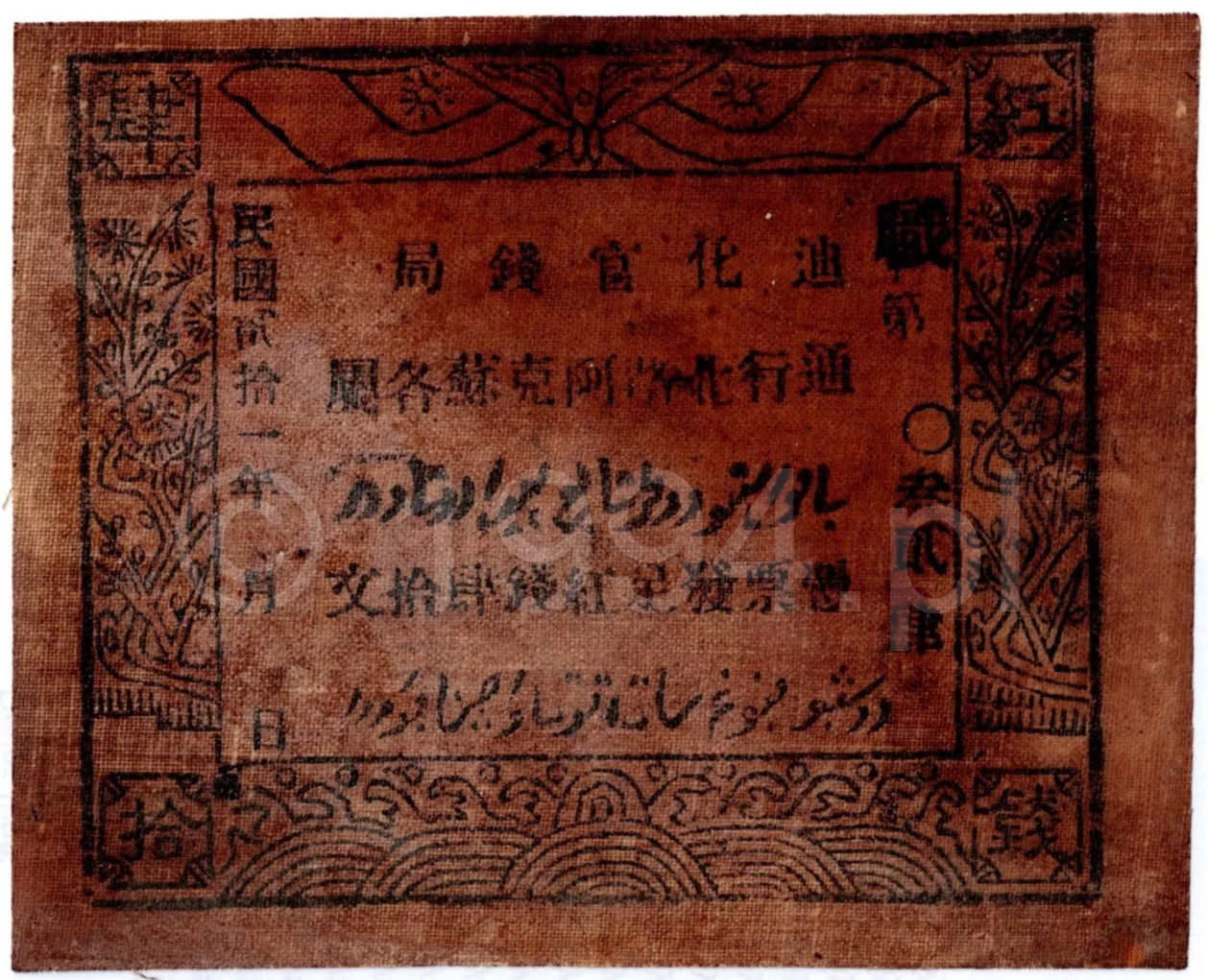
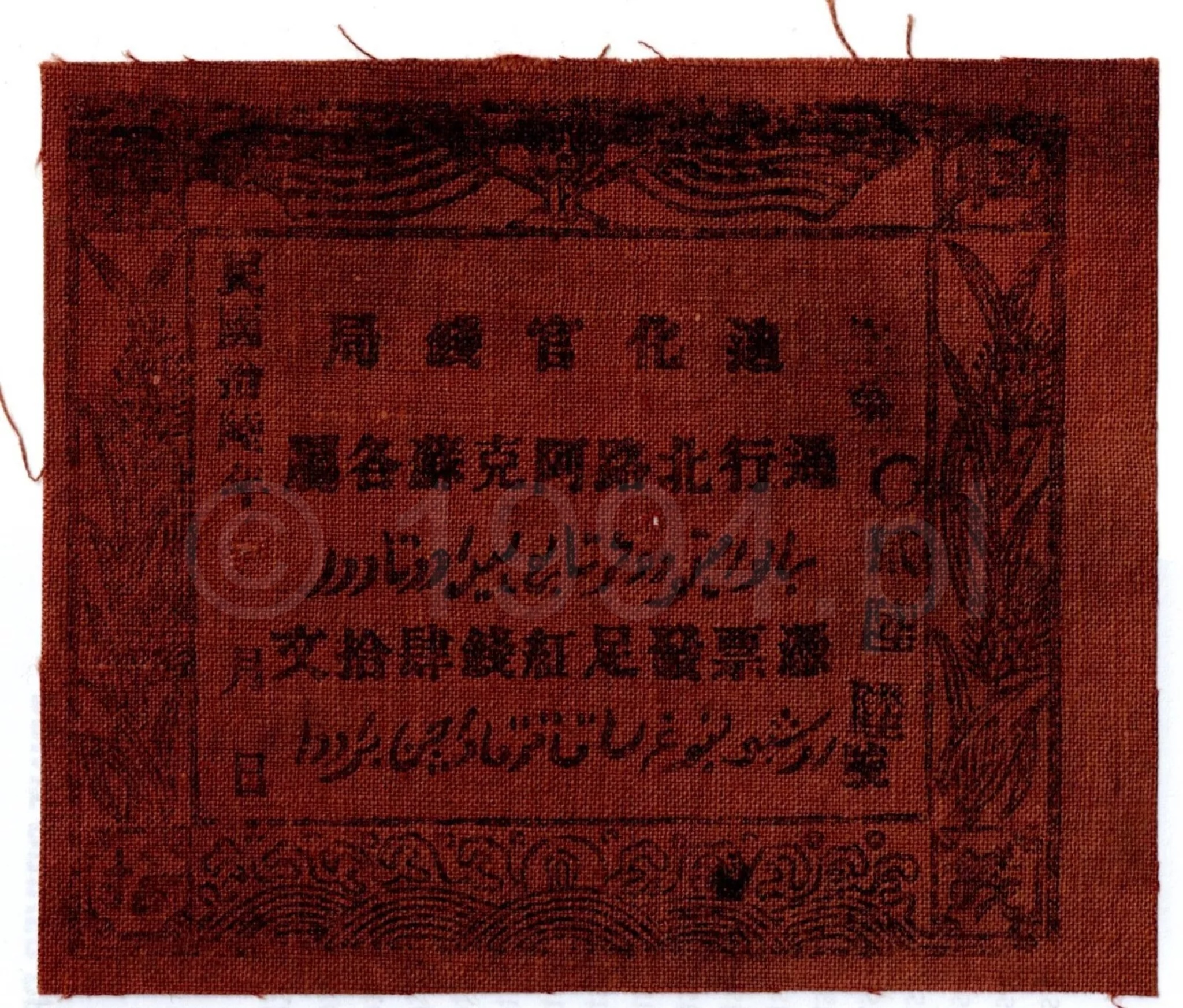
China 1924 Dihua Official Coin Bureau 40 wen textile emergency banknote printed on red cotton with Chinese and Uyghur inscriptions

China 1924 - Dihua Official Coin Bureau 40 Wen Textile Emergency Issue (Pick Unlisted)

This 40 wen textile banknote represents a formally authorized emergency issue produced in 1924 by the Dihua Official Coin Bureau during a period of acute monetary disruption in Xinjiang. Faced with shortages of paper currency, disrupted transport routes, and limited access to centralized printing facilities, local authorities adopted cloth as an alternative monetary substrate to sustain everyday economic activity. Read more →

ChinaTextile Banknote192440 WenCirculated (Textile Issue) Textile BanknoteTextile Emergency CurrencyCloth CurrencyEmergency Issue40 WenWoodblock PrintingDihua Official Coin BureauXinjiangRepublican ChinaRegional Monetary SystemMultilingual CurrencyProvisional FinanceChina1924R8 Extremely RareMuseum GradePick Unlisted
Held
Specimen full sheet Serie A No. 23327 Banco de Zaragoza 100 reales vellón with header and talón, Pick S451s, 1 May 1857

Spain 1857 - Banco de Zaragoza 100 Reales Vellón Serie A Specimen Full Sheet with Header and Talón No. 23327 (Pick S451s)

A true Pick S451s specimen: the complete, original full-sheet specimen of the Banco de Zaragoza 100 reales vellón, dated 1 May 1857, Serie A, serial number 23327. This survival preserves all components of the printer's plate layout exactly as produced: the upper header panel used for alignment and plate control, the left talón for internal audit numbering, and the finished banknote plate. Specimens of type S451s are extremely rare in any form; full sheets retaining both header and talón are almost never encountered. Read more →

SpainSpecimen Full Sheet with Talon1857100 Reales VellónUncirculated (Specimen Full Sheet) SpecimenPick S451sFull SheetHeader PanelTalonUnissuedSerie ASerial 23327100 RealesBanco de ZaragozaSpanish Provincial IssuePrivate Banknote19th Century SpainReales VellonMadrid EngravingMonetary HistorySecurity PrintingSpain1857R8 Extremely RareMuseum Grade
Held
↑ Top