France’s revolutionary paper money stands at the birthplace of modern fiduciary currency. In the
1790s, the National Assembly introduced the Assignat, a note backed by confiscated land from the Crown,
Church, and émigrés. This extraordinary experiment turned political upheaval into fiscal collateral: paper credit
anchored to “Domaines Nationaux.” What survived from this era is not merely currency — it is
revolution printed on paper.
The design language of these notes is unlike anything before them: bold civic emblems, classical allegories,
and typographic anti-counterfeit systems that predated modern security printing. The
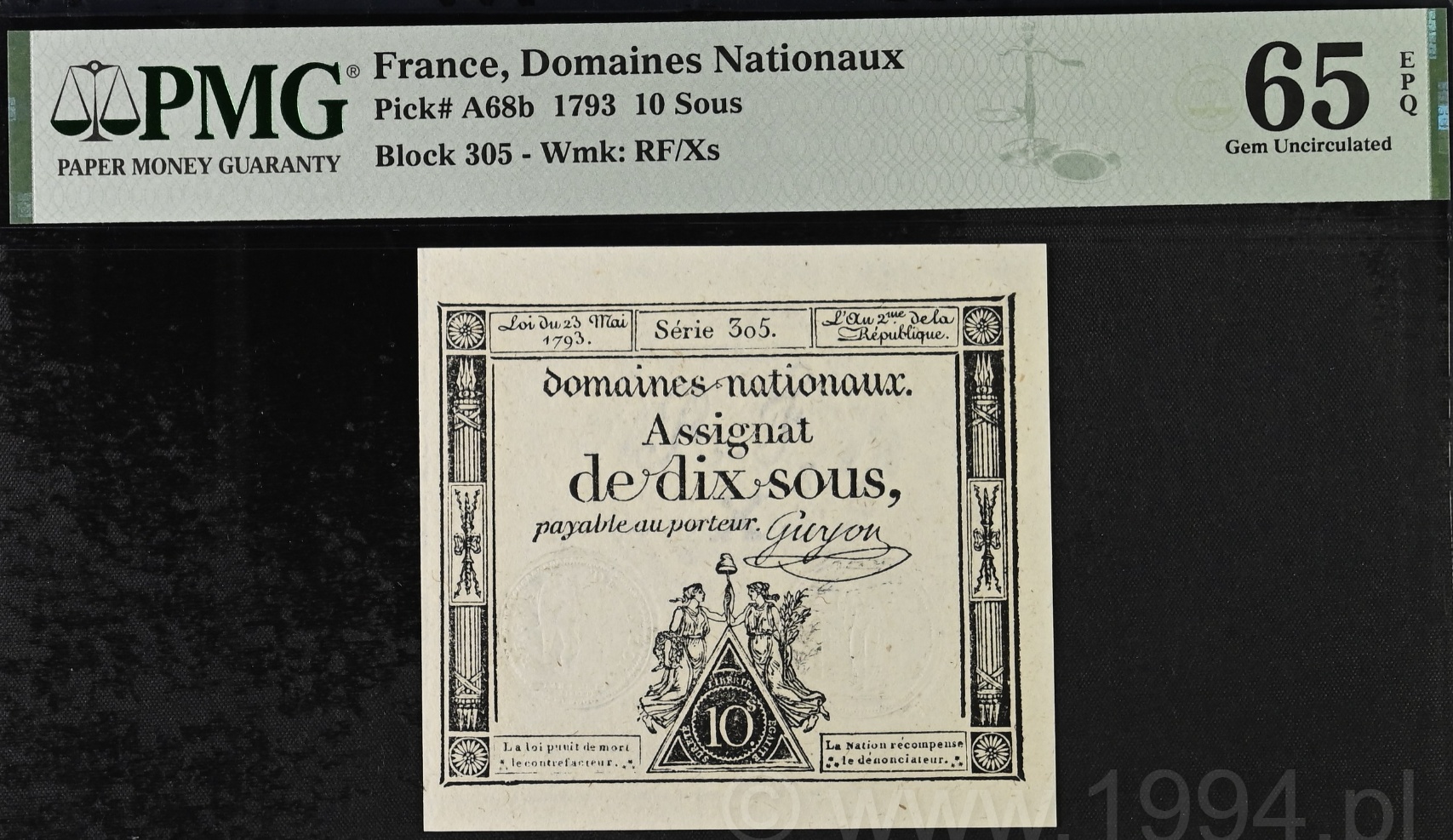
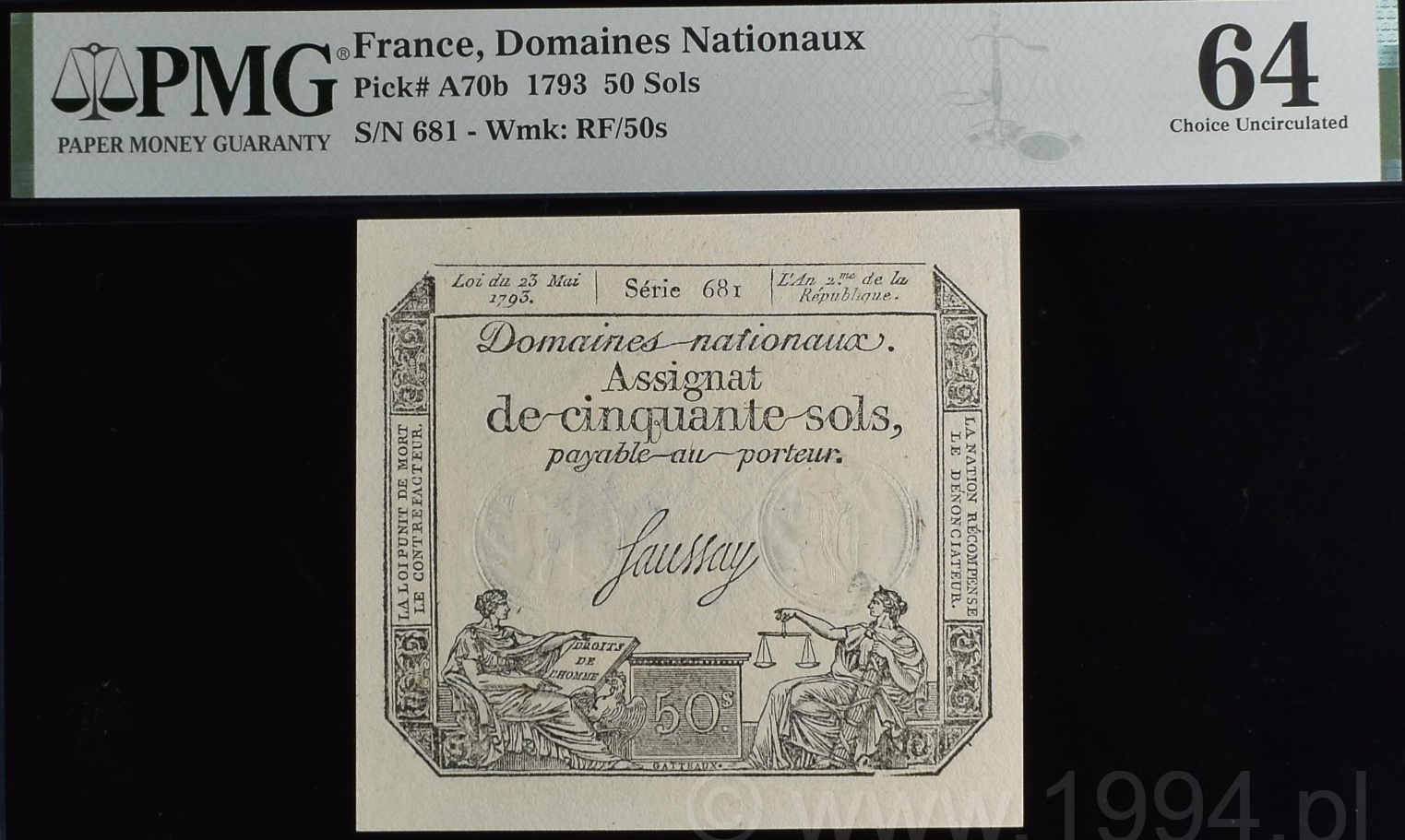
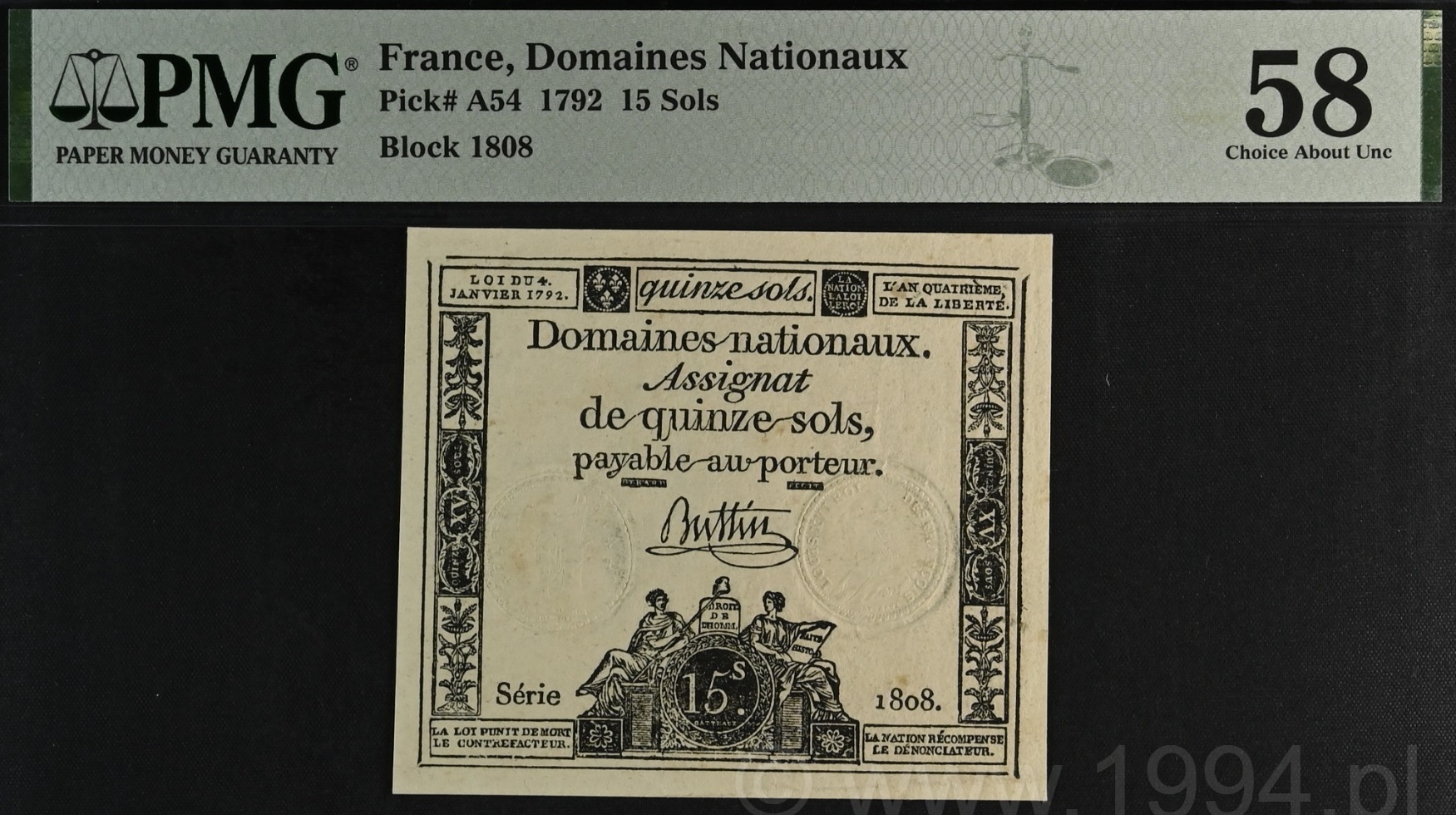
small-denomination assignats de sous, printed for everyday commerce, used standardized frames and
watermark codes (“RF/Xs”, “RF/50s”, etc.) to improve trust during inflationary pressure. Their mottos —
LA LOI PUNIT DE MORT LE CONTREFACTEUR — reflected the Revolution’s determination to protect its fragile
fiscal foundation.
These fractional notes circulated through the most intense phases of the French Revolution: the constitutional
monarchy’s fall, the Reign of Terror, wartime mobilization, and the financial collapse that followed. Each piece
is a material witness to a society redefining property, sovereignty, and the meaning of value itself. The
Domaines Nationaux issues—now often overlooked next to grander assignats—preserve the
daily-life paper that paid for bread, rent, and market trade during a period of national reinvention.
The selections below highlight these small-format fiscal notes without repeating card-level details. Use the filters
above to explore France’s revolutionary paper money as the section expands to include larger assignats, emergency
issues, and later 19th-century banknotes shaped by the legacy of 1790s financial experimentation.