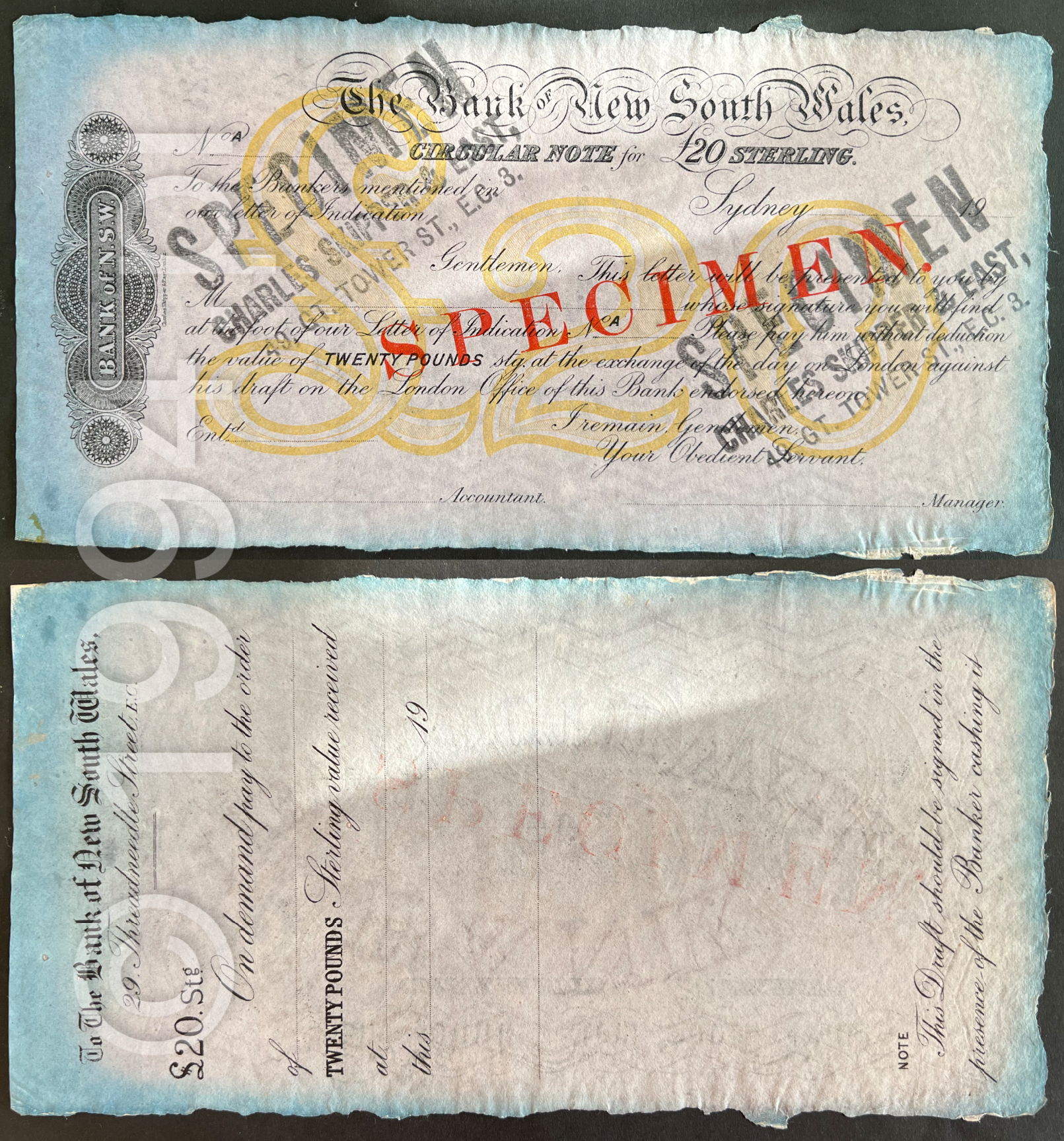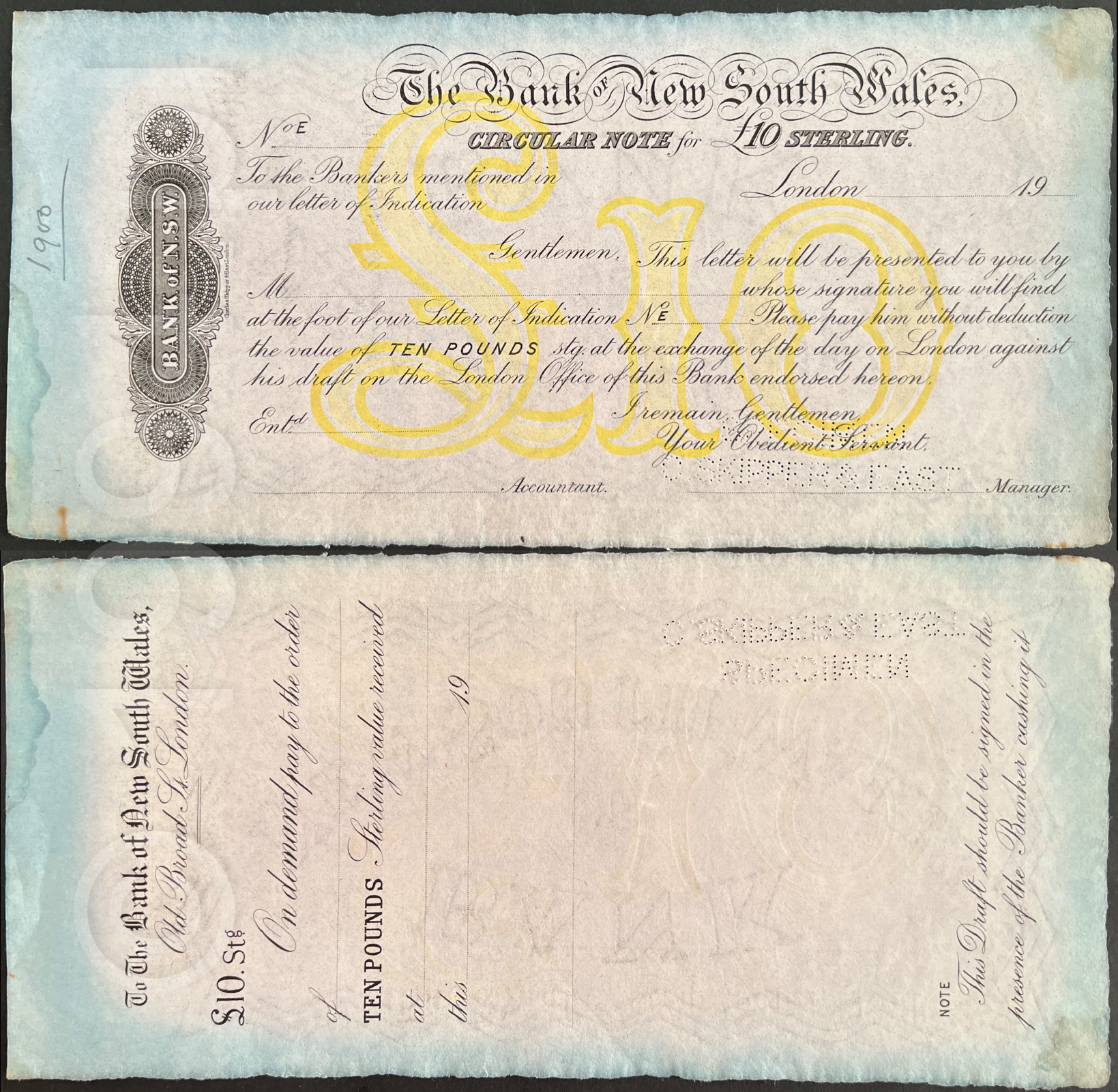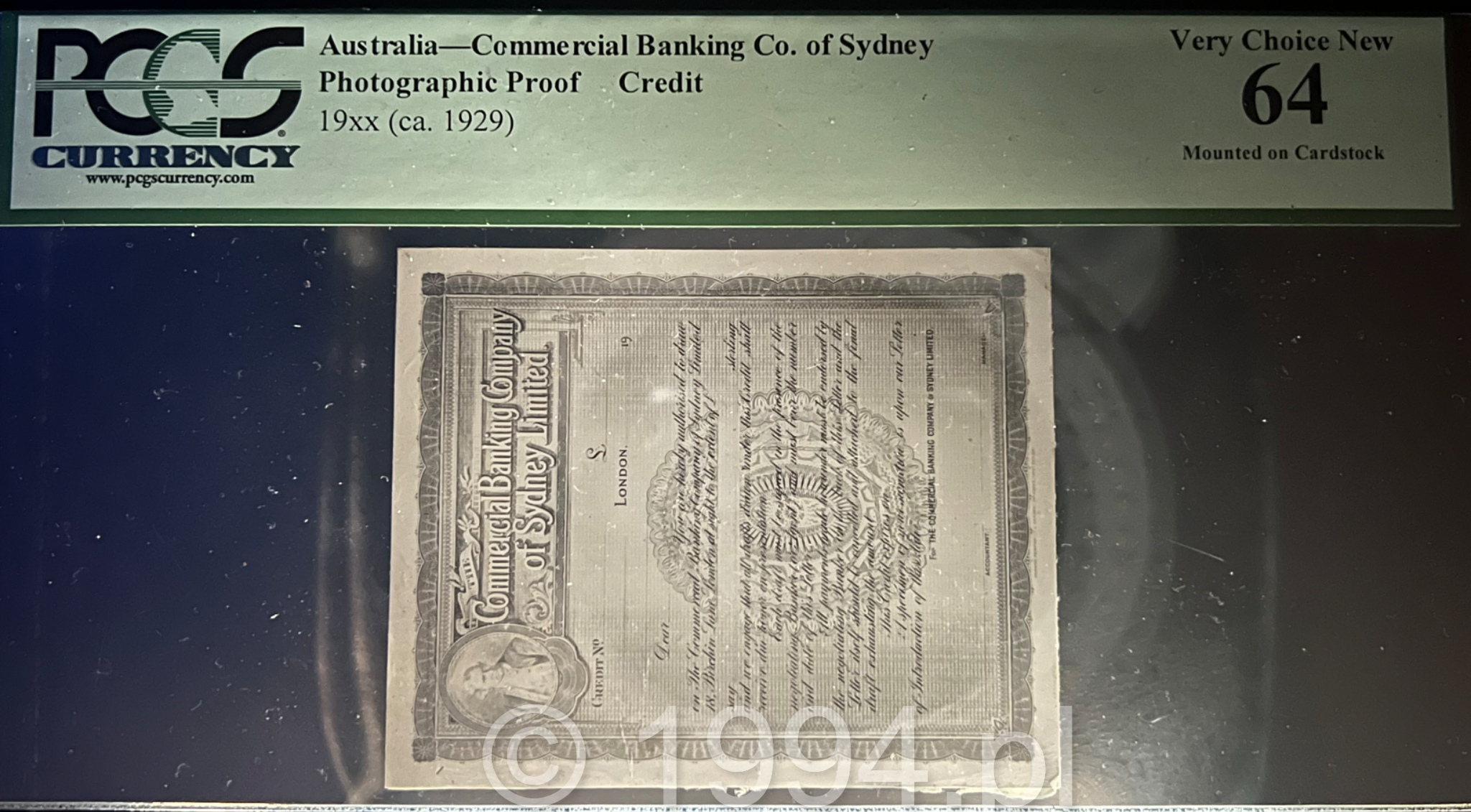
Description and research notes
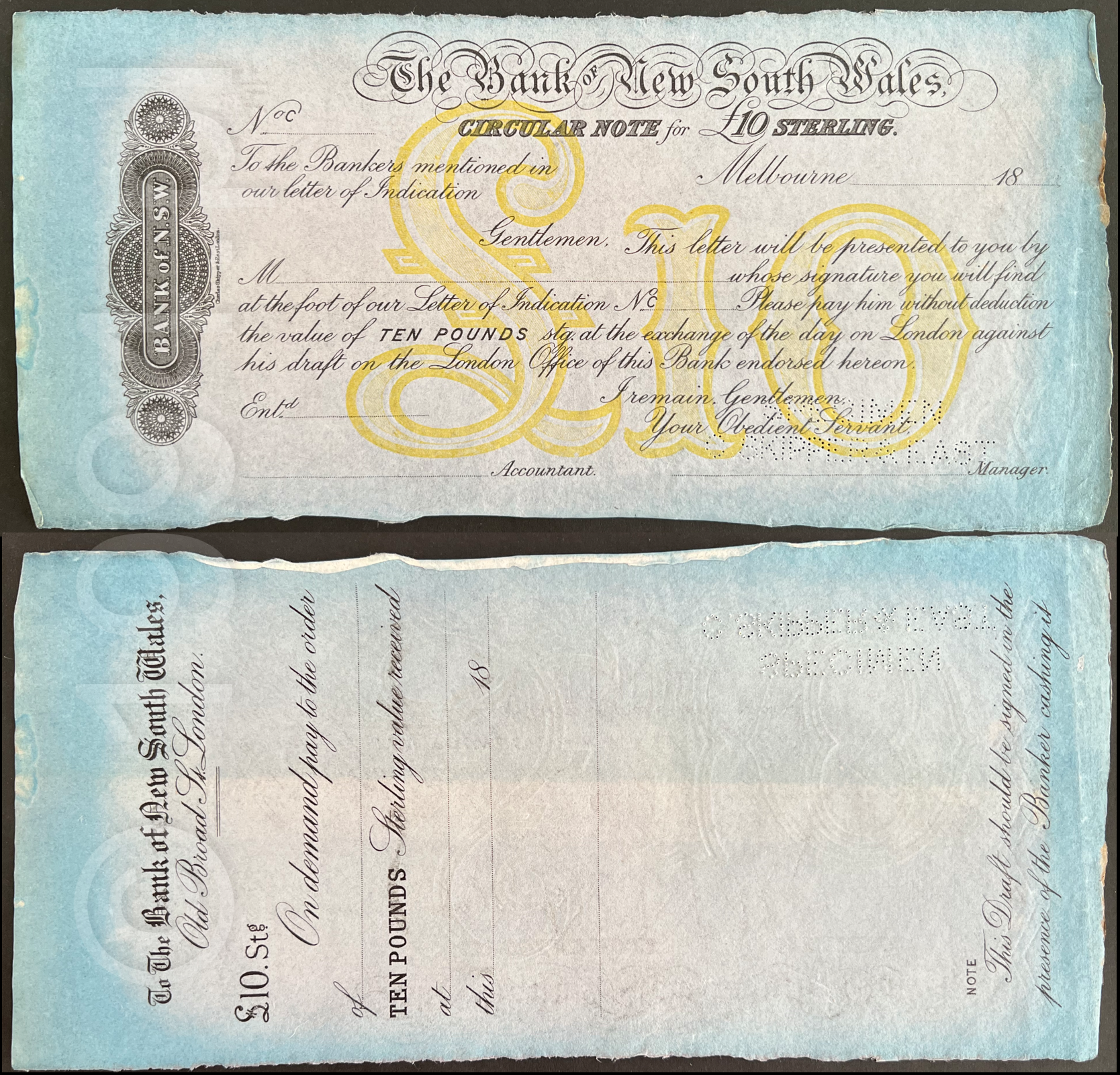
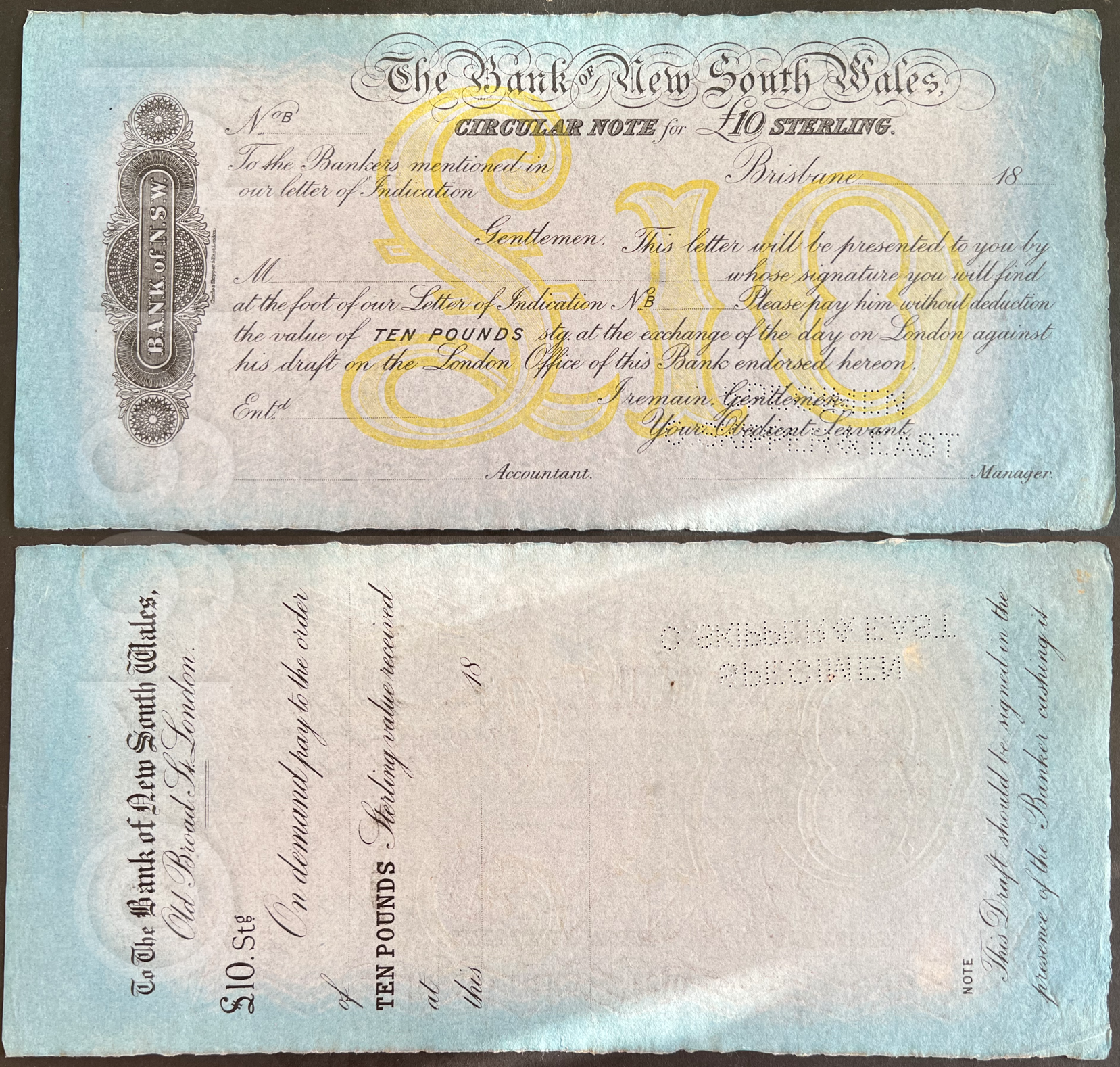
This £10 Sterling Circular Note specimen was prepared for The Bank of New South Wales at Brisbane as a portable banking instrument linking the bank's Australian branch network with its London office and correspondent bankers abroad. The printed form belongs to the 19th-century series identified by the open date field "18__" and preserves the complete unused structure through which a traveler could obtain funds while overseas.
The face is headed "The Bank of New South Wales" above the designation "CIRCULAR NOTE for £10 STERLING." Brisbane appears beneath the denomination, while the opening instruction is addressed to the bankers named in the accompanying Letter of Indication. The text explains the circular-note procedure in full: the presenter was identified through the signature recorded on the Letter of Indication, after which the banker was instructed to pay the value of ten pounds sterling without deduction at the exchange of the day on London, against the holder's draft on the London office of the bank endorsed on the instrument.
The design combines formal banking script with an elaborate vertical engraved security panel at left carrying "BANK OF N.S.W." and a large yellow-gold underprint built around the denomination 10 across the central field. The paper is framed by a pale blue border and carries a large BANK OF NEW SOUTH WALES watermark together with oversized surrounding ornamental watermark elements extending across much of the sheet.
Specimen status is shown by the perforated SPECIMEN cancellation through the lower right portion of the face. The note remains fully unissued, with the operational fields left blank and the Accountant and Manager lines unsigned.
The reverse is fully printed as a blank demand draft and forms the second working part of the circular-note system. It is drawn on The Bank of New South Wales, Old Broad St., London, and provides for payment "On demand" to the order of the named party, repeating the value as £10 Stg. and "TEN POUNDS Sterling value received." Blank fields were provided for place and date, again using the printed "18__" date format.
A printed instruction states that the draft should be signed in the presence of the banker cashing it, adding a further control step to the payment process. The reverse also retains the pale blue border and clearly reveals the large institutional watermark and surrounding ornamental watermark structure through the paper.
Together, the face instructions, Letter of Indication reference, signature-verification procedure, London exchange provision, reverse demand draft, perforated specimen treatment, and watermark security paper preserve the complete operating structure of a late 19th-century Bank of New South Wales circular note. Pick Unlisted, this Brisbane £10 specimen is recorded here as R9 Extremely Rare, with this example representing the only known specimen of the exact form.