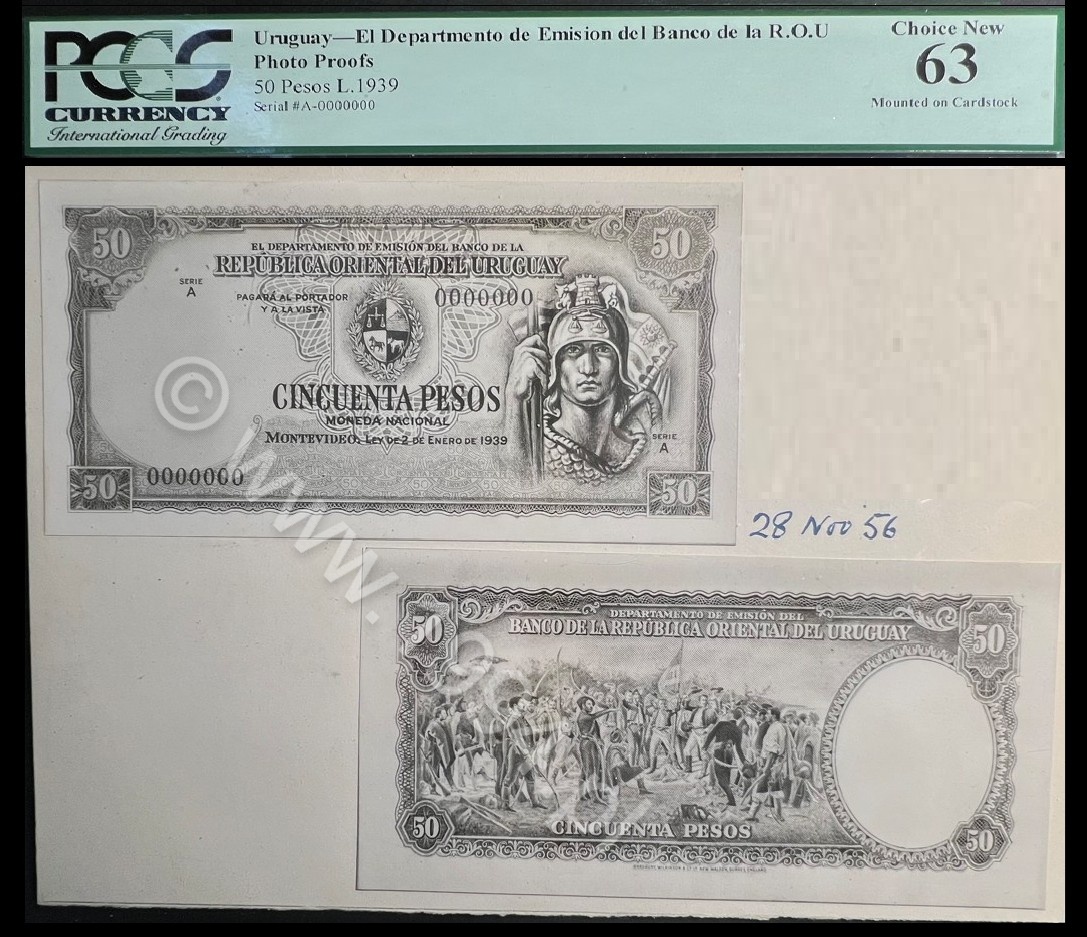
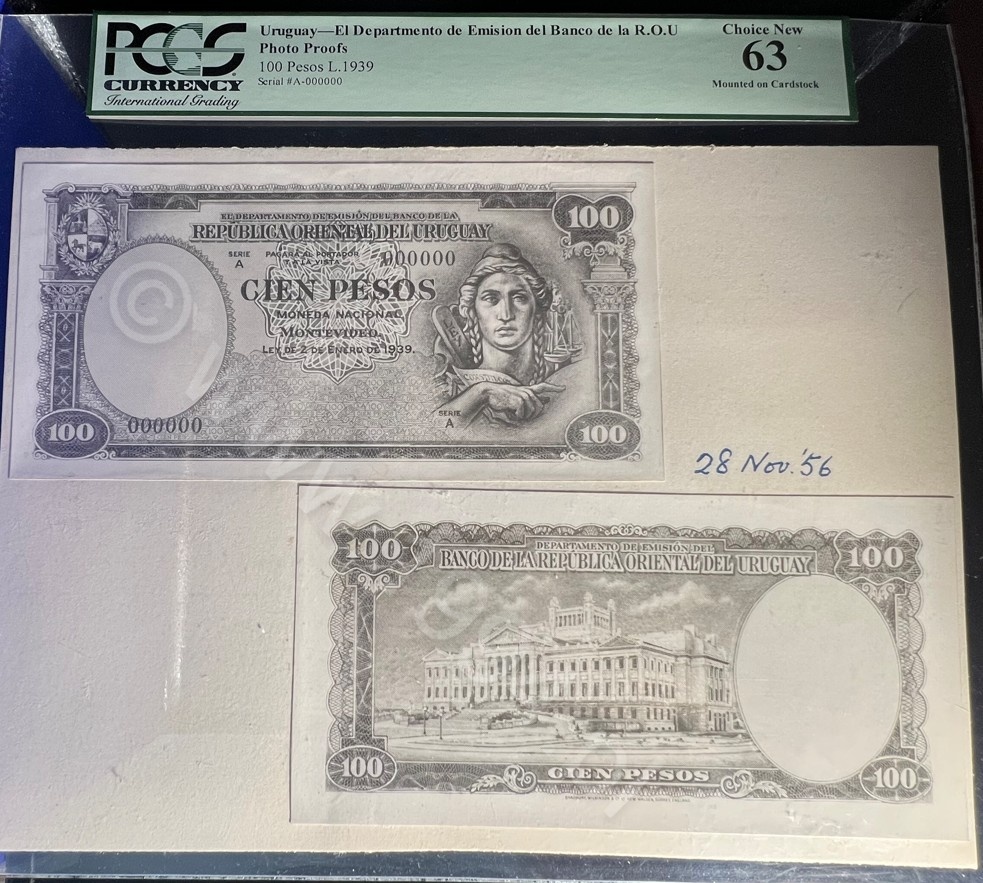
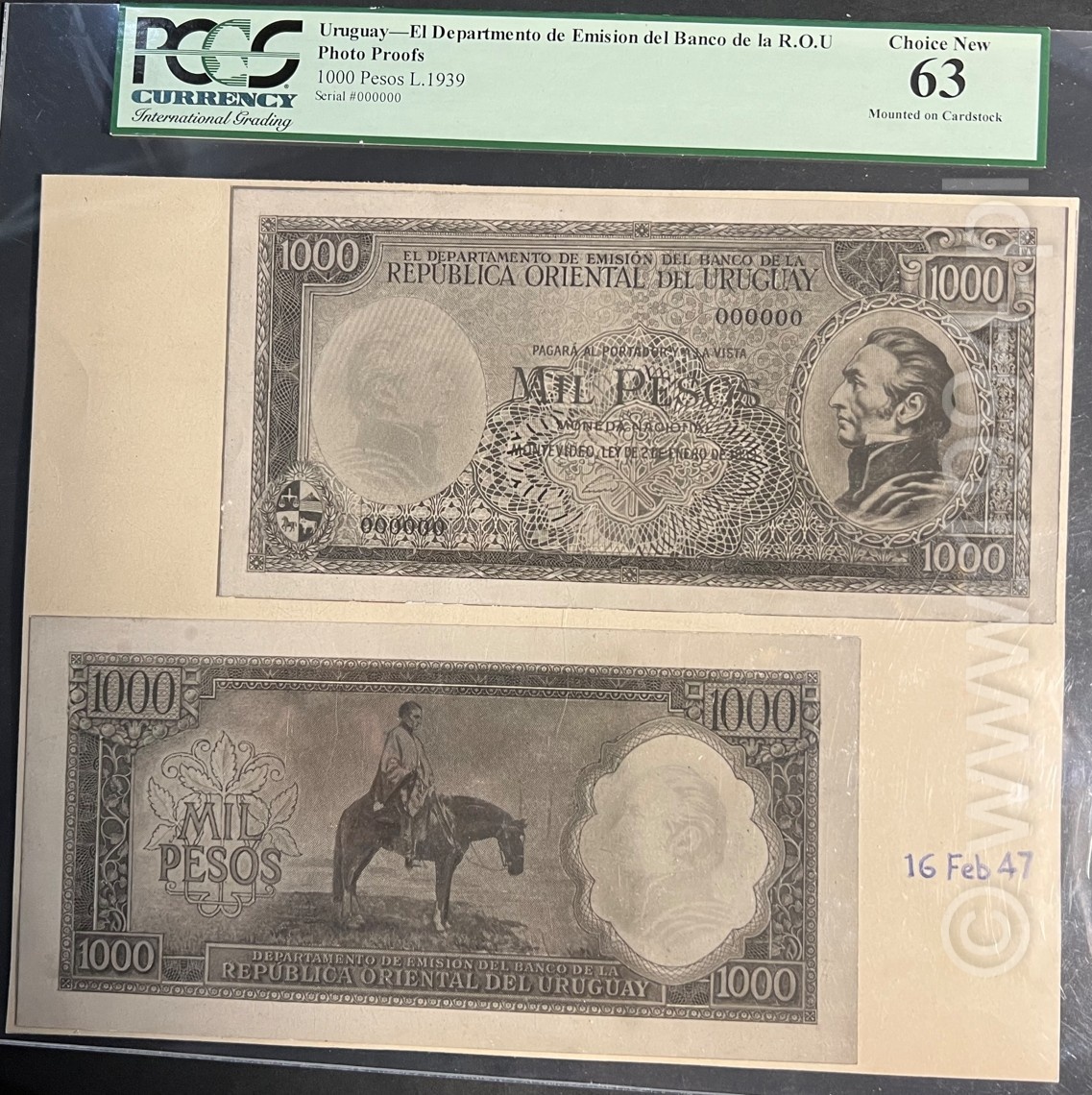
Uruguay 1939 - Departamento de Emision del Banco de la Republica Oriental del Uruguay 50 Pesos Serie A Photographic Proof Pair, Dated 28 November 1956 (Pick Unlisted)
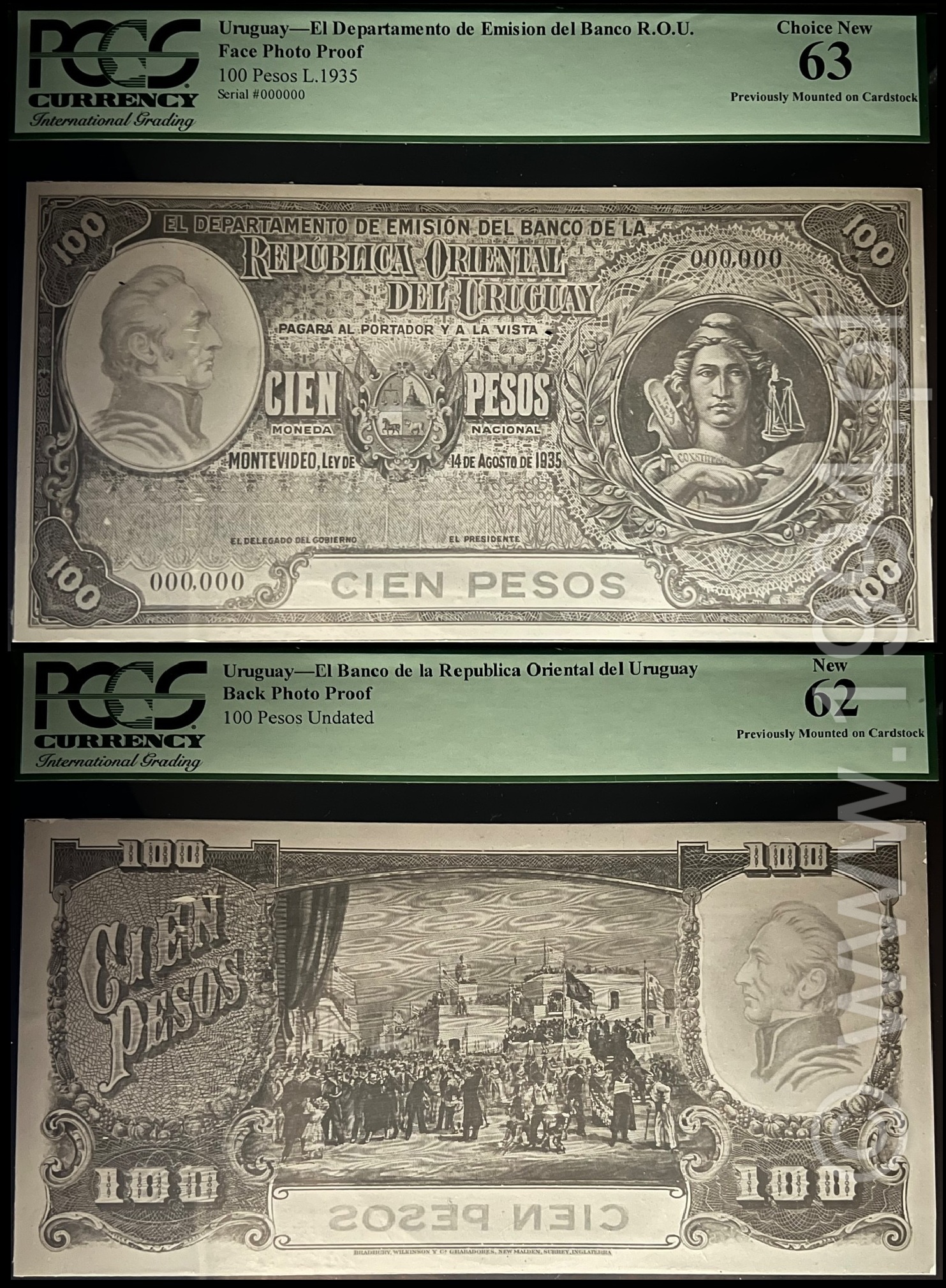
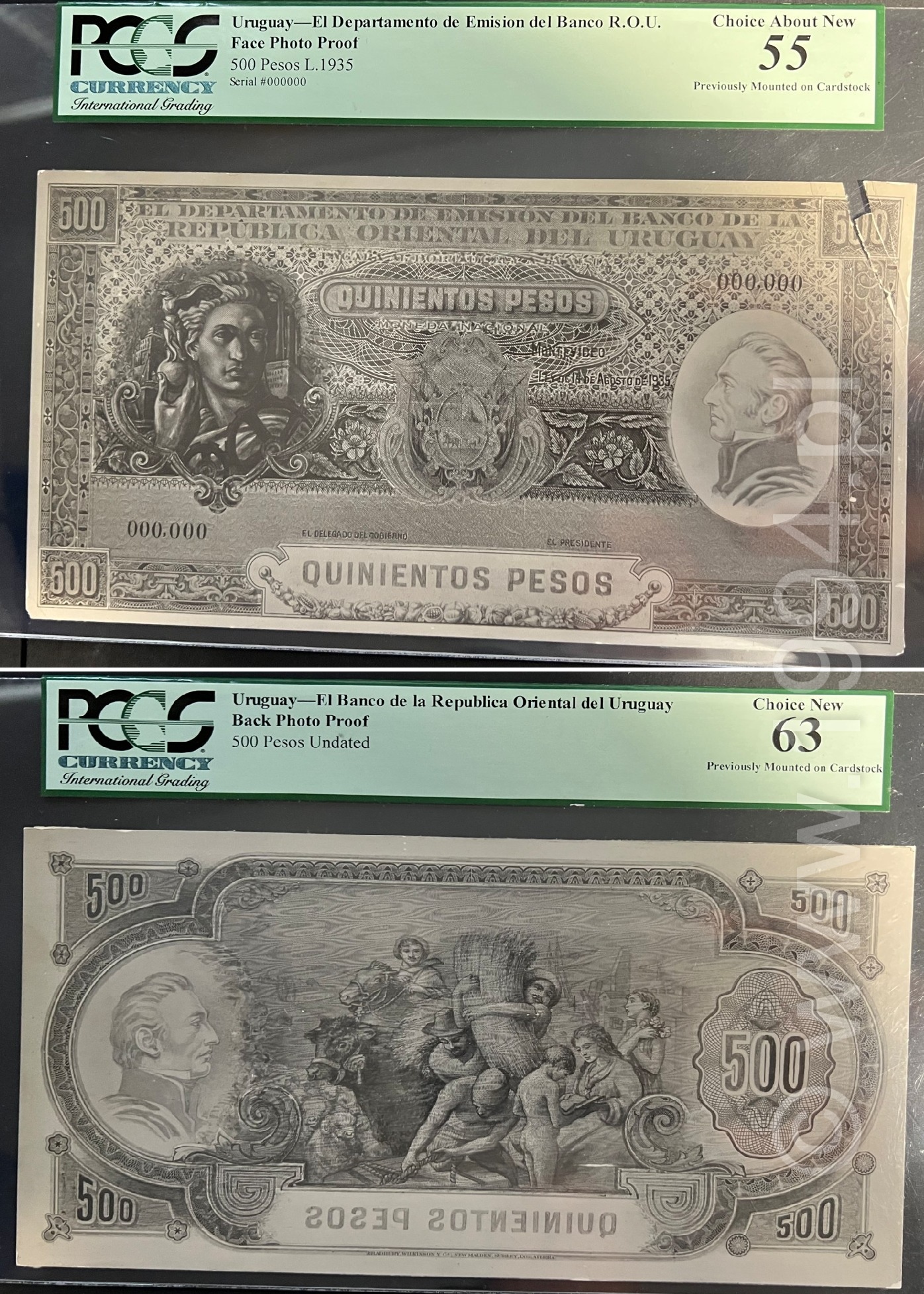
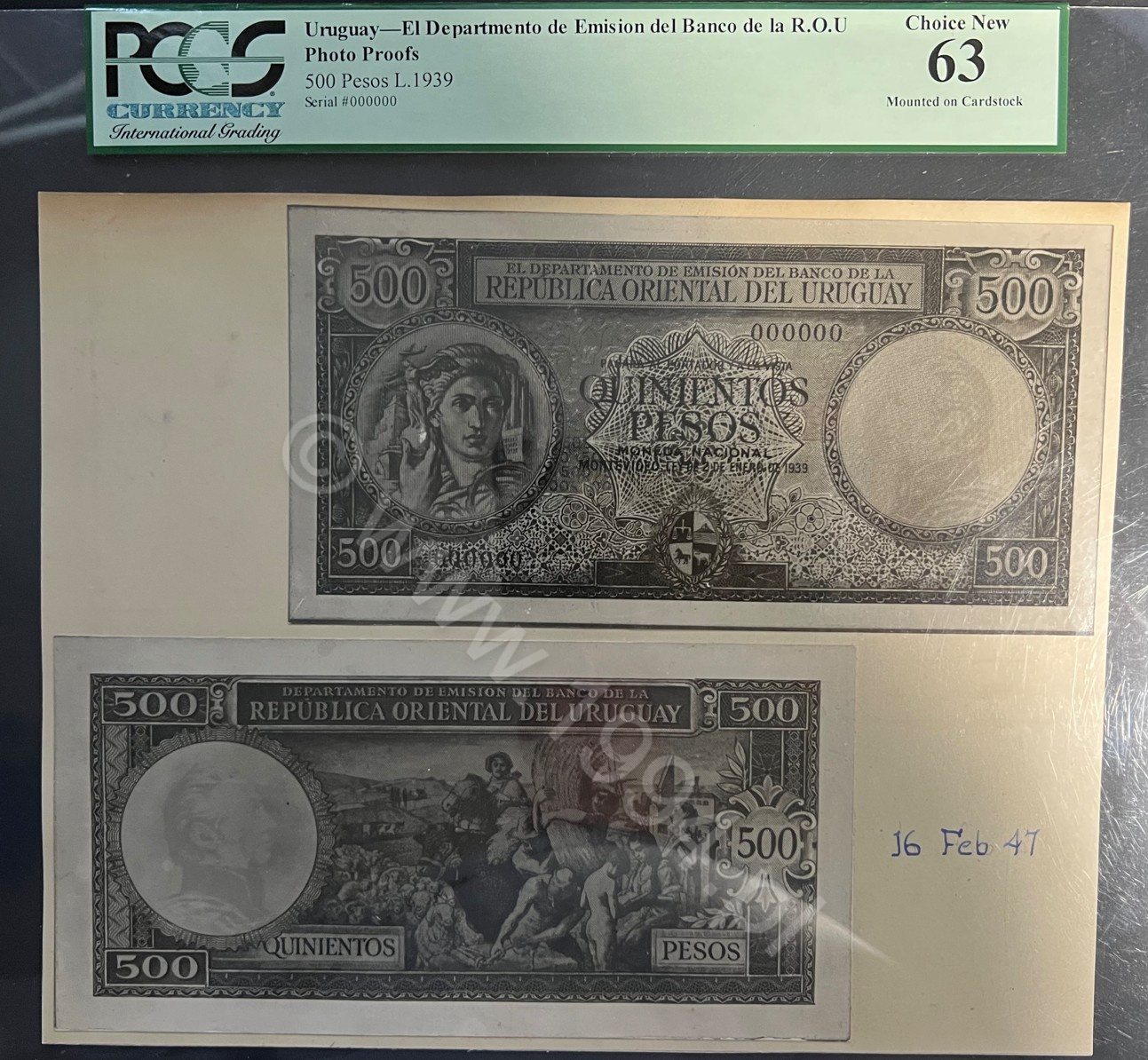
The photographic process gives the object a character distinct from conventional banknote proofs. Rather than presenting impressions pulled directly from engraved plates, it records the complete design photographically, preserving scale, arrangement, and visual relationships in monochrome. Photographic proofs formed part of the documentary infrastructure surrounding security printing, allowing completed designs to be retained, circulated internally, compared, and reviewed without requiring additional plate impressions. Read more →
UruguayPhotographic Proof Pair193950 PesosPCGS 63 Choice New Photographic Proof Pair50 PesosSerie AAll Zero Serial NumbersFace and Reverse PairMounted on Original CardstockHandwritten Date 28 November 1956Archival Photographic RecordIndigenous Warrior PortraitFeathered HeaddressNational ArmsHistorical Assembly ReverseFace Watermark AreaReverse Watermark AreaDepartamento de Emision del Banco de la Republica Oriental del UruguayThomas De La Rue and Company LimitedPhotographic Banknote ProofSecurity Printing ArchiveBanknote Design DocumentationMonochrome Photographic PresentationMounted Archival ProofPrinter Reference MaterialFace and Reverse Design RecordEngraving DocumentationArchival Production MaterialDesign to Production SequenceRelated Finished Specimen Pick 38asSame Face and Reverse Design as Pick 38asSame Serie A Layout as Pick 38asSame Indigenous Warrior Portrait as Pick 38asSame Historical Assembly Reverse as Pick 38asUruguay Monetary History1939 Monetary Series1956 Archival DateInterwar Banknote DesignPostwar Archival ReferenceState Issued CurrencyInstitutional Design RecordBanknote Production HistorySecurity Printing HistoryArchival Design ContinuitySeventeen Years After Original AuthorizationHistoryUruguay1939195650 PesosPick UnlistedPick 38aPick 38asPCGS 63Choice NewR9 Extremely RareMuseum Grade
Held