Description and research notes
A unique high-denomination Bradbury Wilkinson audit-range specimen and the rarest surviving document from New Zealand’s private-banknote era, the £20 Blue (Pick S194s) represents the apex of BNZ’s color-coded denomination hierarchy. This specimen is not a generic zero-serial example: it carries dual live serials (No. 061001 and No. 066000), identifying it as an internal audit-range piece used by Bradbury Wilkinson for plate alignment, tint calibration, and numbering verification during the official approval process.
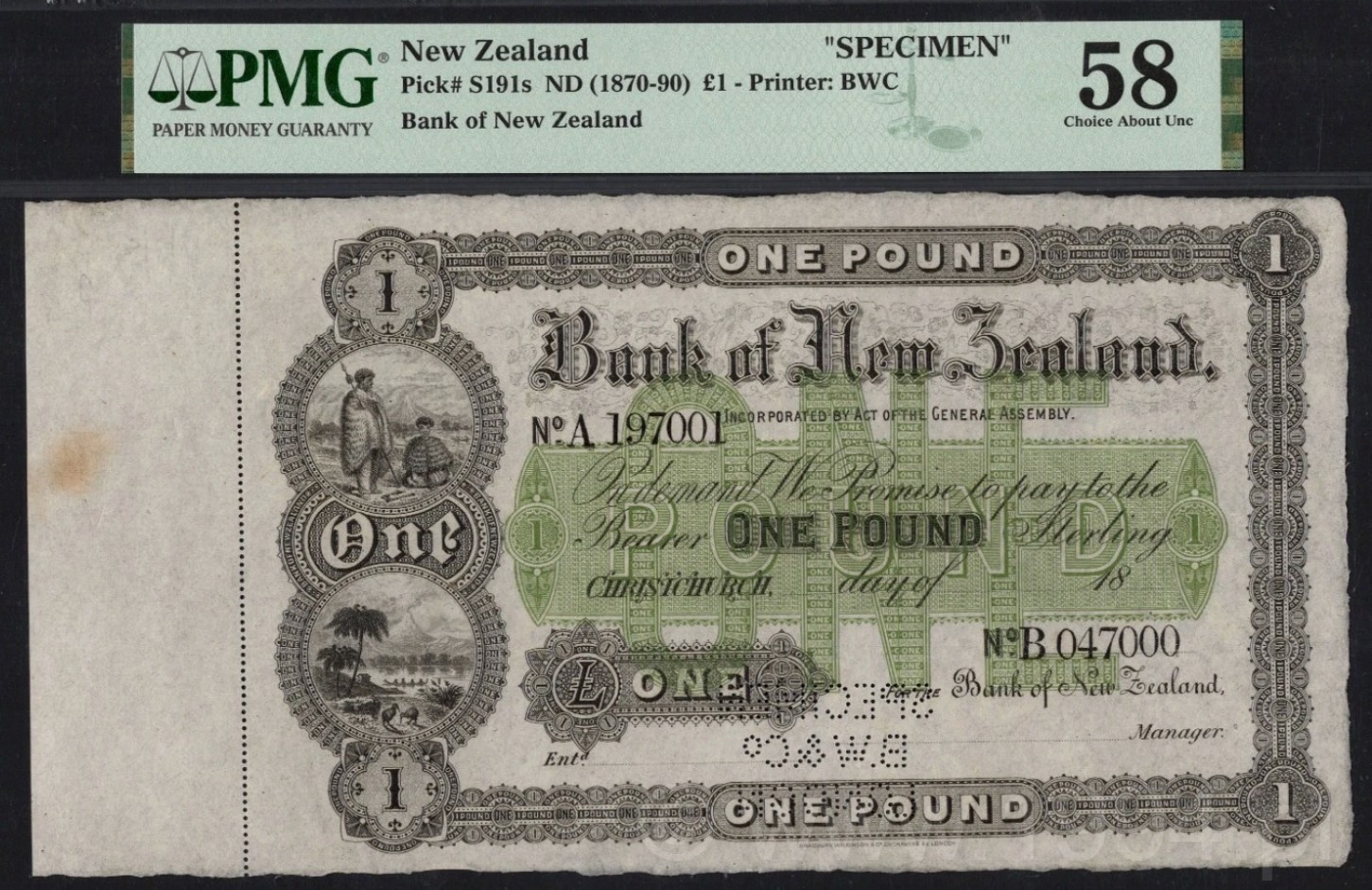
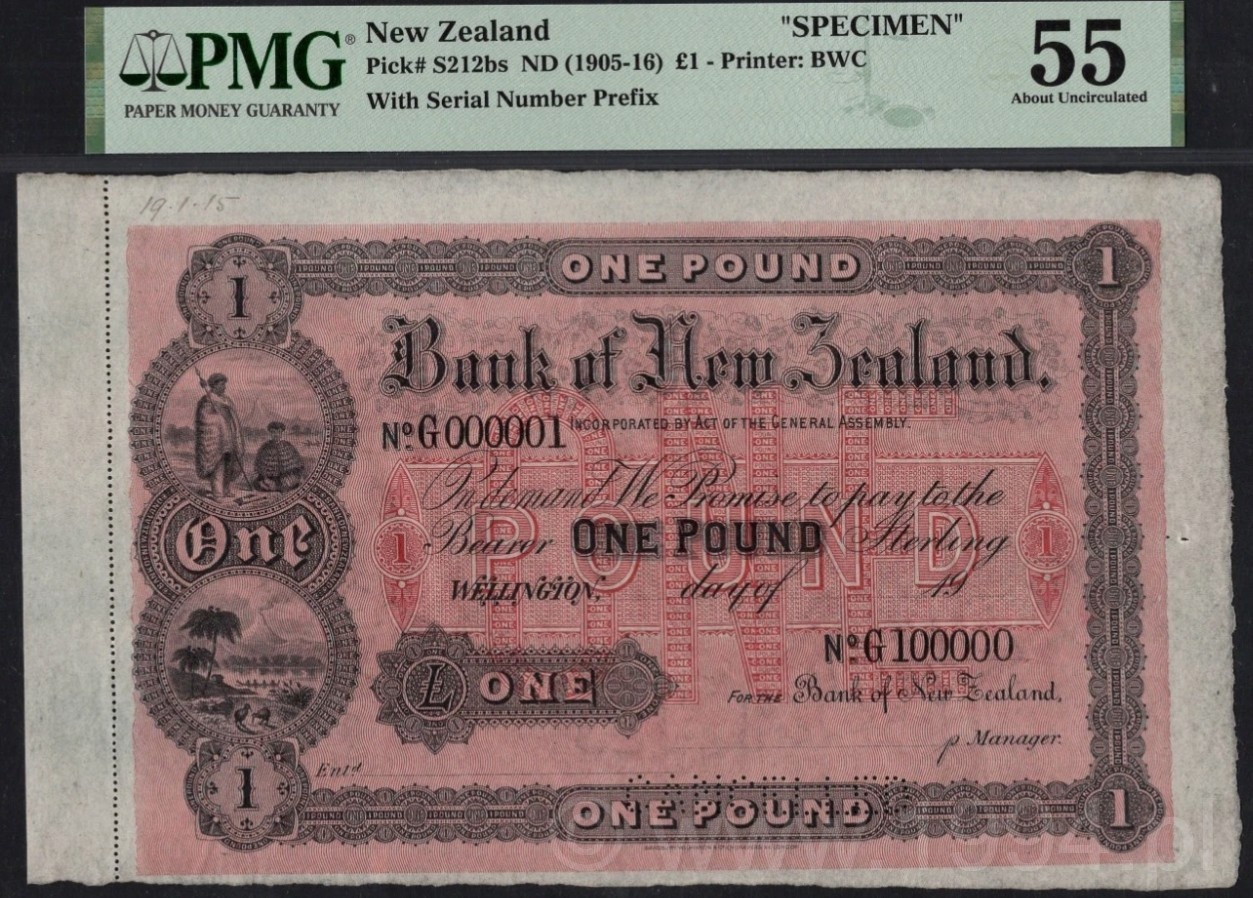
The £20 denomination occupied the highest settlement tier within the BNZ system and was deliberately executed in a blue–slate color family reserved for upper-level clearing and interbank instruments. This chromatic choice followed Bradbury Wilkinson’s established BNZ color logic, progressing from £1 Green through £5 Red and £10 Brown to the subdued blue tones of the £20, visually signaling professional handling and high-value usage.
The obverse presents a fully realized Edwardian composition: an engraved Māori portrait vignette rendered with anthropological precision, a coastal scene symbolizing New Zealand’s export-driven economy, and a central blue-grey guilloche medallion exclusive to the bank’s highest denomination. The reverse features an ornate frame enclosing the word POUNDS, surrounded by micro-engraved denomination clusters and anti-photographic detailing. Watermark impressions visible in transmitted light correspond to the special paper stock used only for BNZ’s top-tier issues.
Historically, £20 represented the highest practical denomination issued by New Zealand’s private banks prior to monetary centralization in 1934. Circulating examples were systematically redeemed and destroyed, leaving archival specimens as the sole survivors. Audit-range serial-prefix specimens such as this were printed in microscopic quantities and retained within Bradbury Wilkinson’s London archives, making their survival extraordinarily unlikely.
The PMG 55 About Uncirculated grade is exceptionally high for a large-format, soft-paper audit specimen. With Pop 1/1 status and no evidence of any additional audit-range examples in institutional or private holdings, this piece stands as the definitive reference for the BNZ £20 issue and a cornerstone artifact of New Zealand’s pre–Reserve Bank monetary history.