Description and research notes
A wartime £5 specimen of the Bank of New Zealand, printed in London by Bradbury, Wilkinson & Co. during the 1916–1920 production cycle. The note carries live serial numbering and survives as an internal audit and approval piece from a numbered print run, distinct from zero-serial display specimens.
Within the BNZ color lineage, the £5 denomination occupies the warm-tone tier established by the pre-war £5 Orange issues of 1895–1915. Wartime pigment constraints and paper rationing produced a tonal shift toward red-rose or salmon while preserving the same functional position within the denomination hierarchy. This note documents the wartime evolution of that established £5 color lineage, not a separate color class.
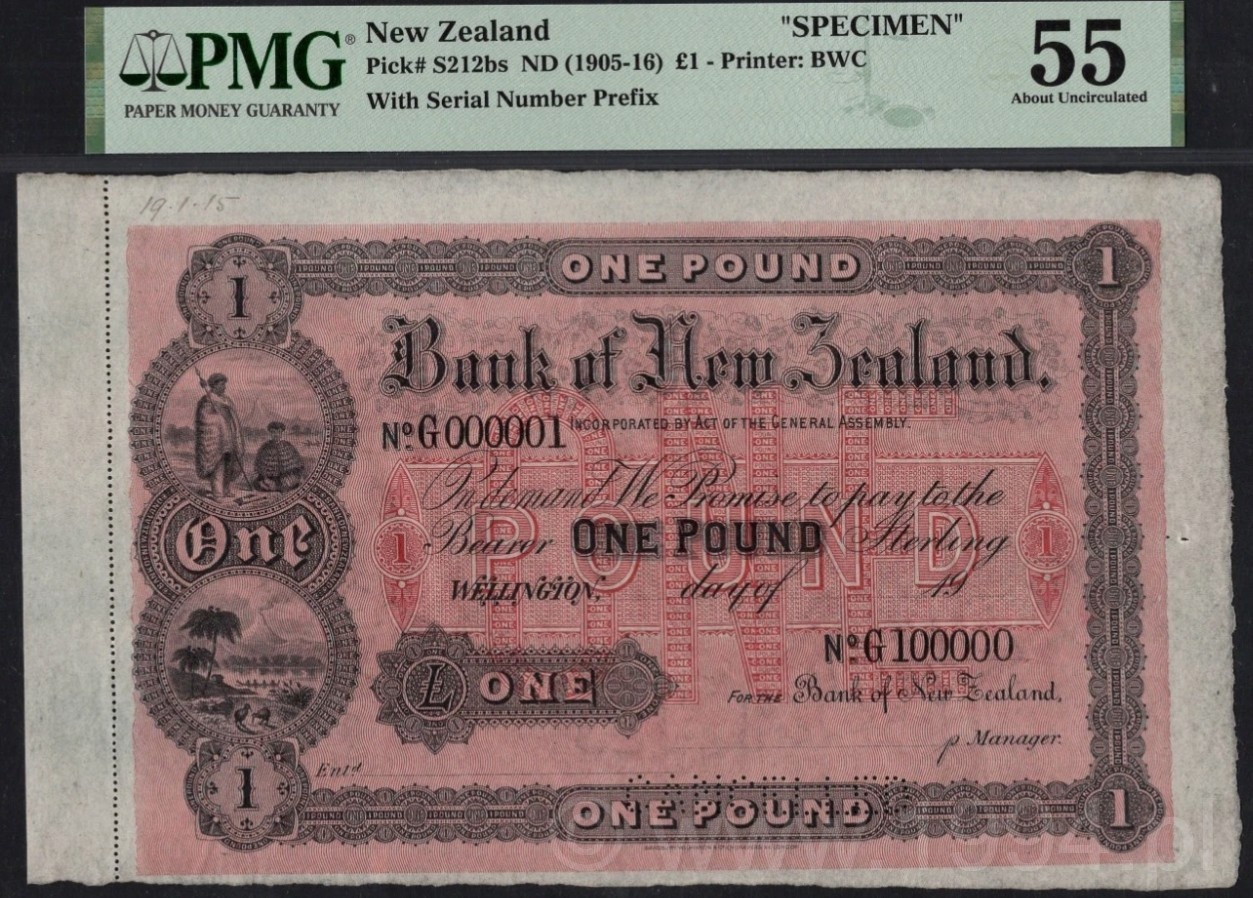
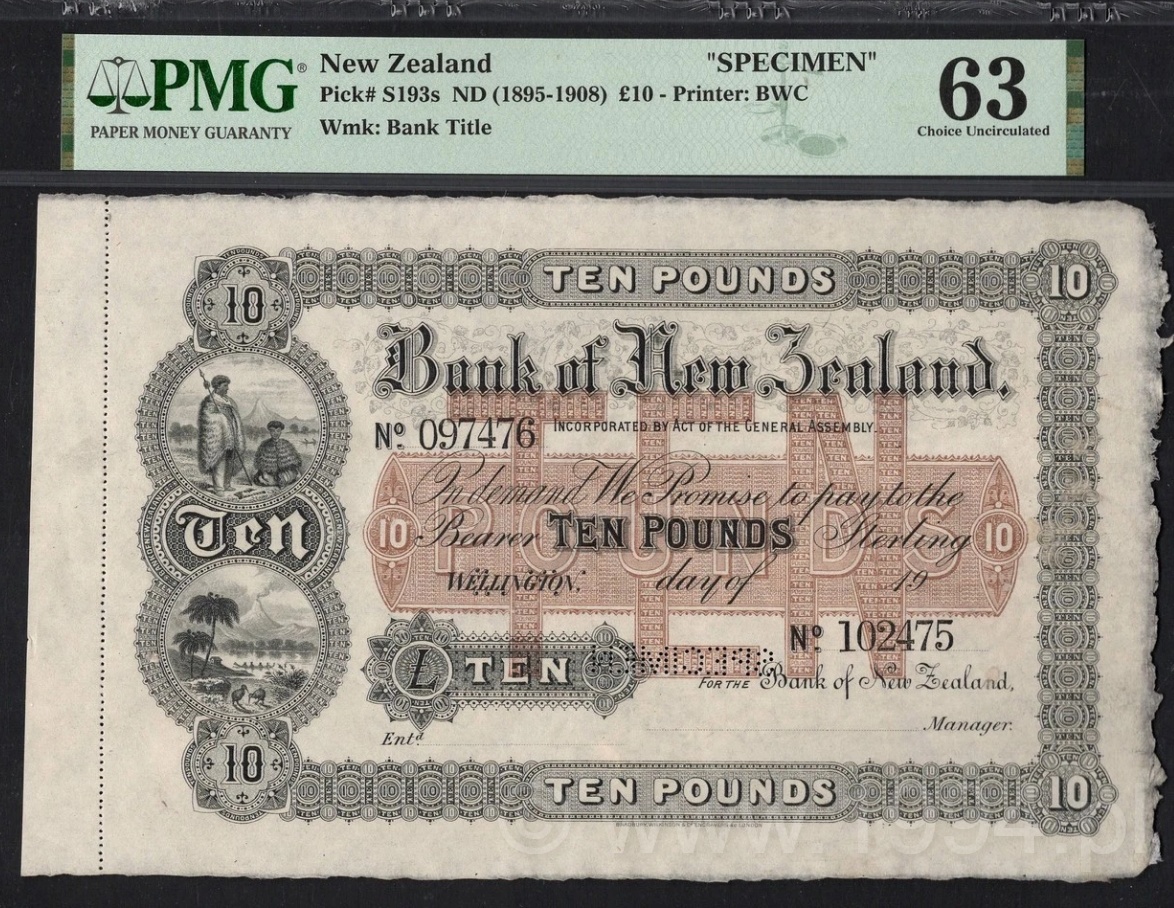
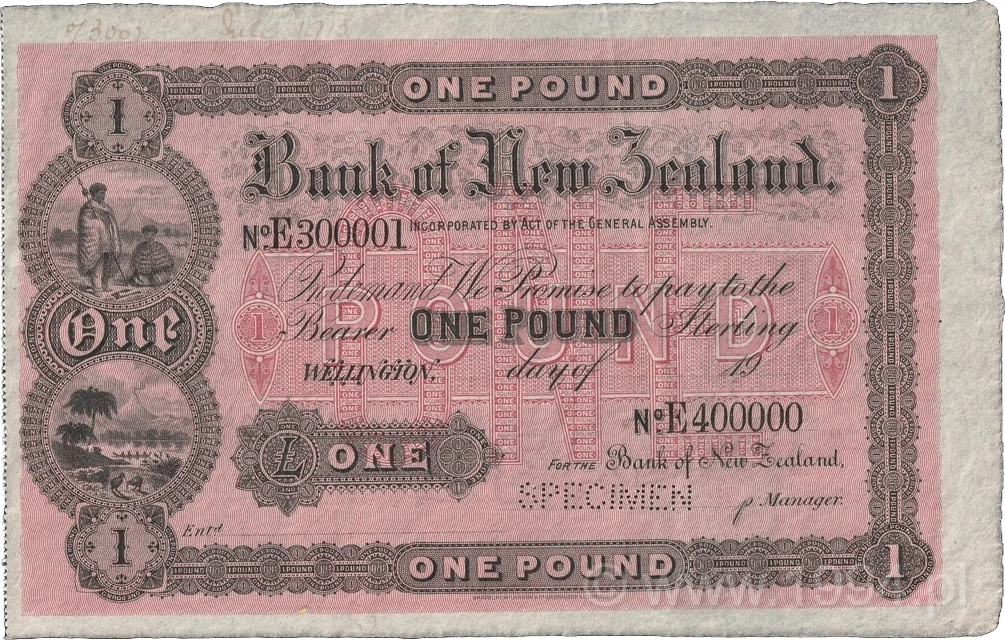
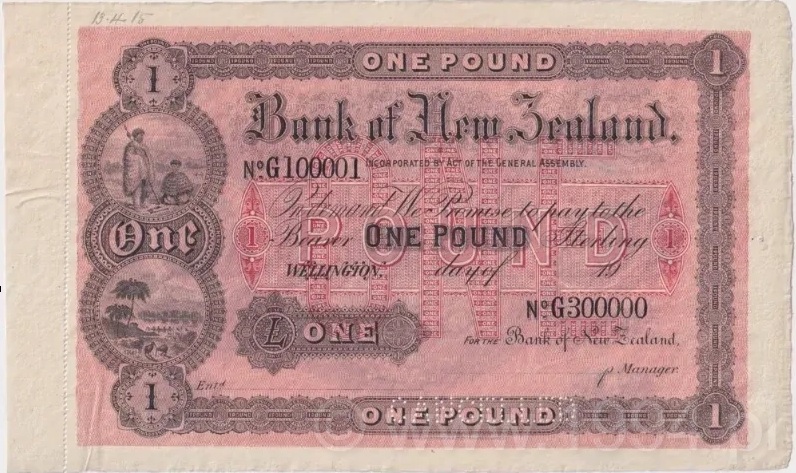
The obverse reflects Bradbury Wilkinson’s mature colonial engraving style, with a Māori chieftain and youth vignette, coastal landscape, and dense guilloche structures printed in saturated wartime tint. The reverse is executed in blue-green interlace characteristic of BWC production of the period.
The specimen carries dual live serial prefixes (7/180001–7/220000), confirming its place within an active production range. The perforated CANCELLED across the signature panel prevented circulation, while the pencil annotation dated 29 September 1917 corresponds to the production record associated with the piece. PMG records this feature as Printer’s Annotation.
The 1916–1920 BNZ series belongs to the final decades of New Zealand’s private-bank note-issuing era before the establishment of the Reserve Bank in 1934. Internal audit and approval material from this production cycle was normally retained only for operational purposes and was seldom preserved once its function had ended. Surviving examples are exceptionally scarce.
This specimen is a reference-grade artifact of New Zealand monetary history, combining wartime production context, live serial numbering, internal control markings, and documented survival from the Bank of New Zealand’s private-issue period. Certified PMG 65 EPQ Gem Uncirculated, it is the sole PMG-certified example at this grade and Top Pop. R8 rarity.