El Salvador 1999 - 25 Colones Issued Note (Pick 155)
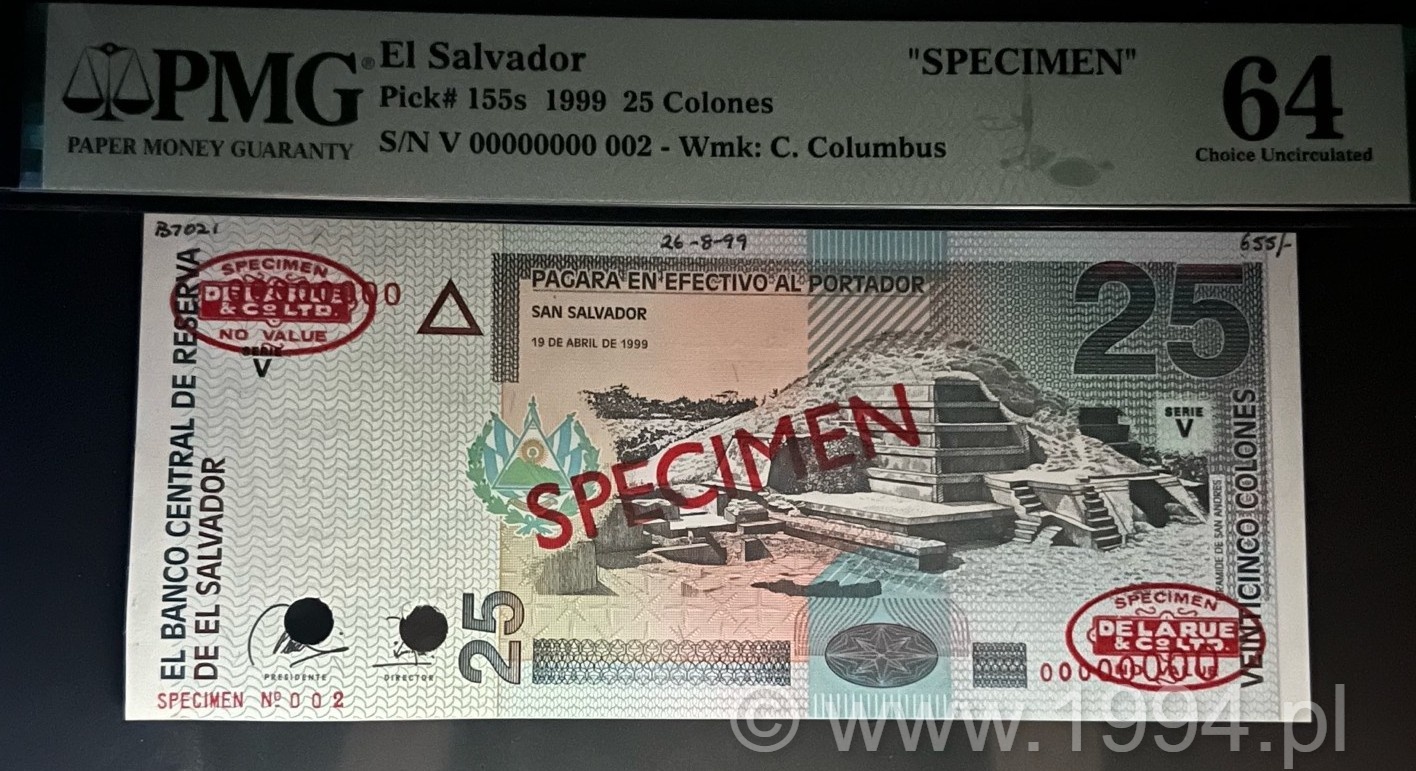
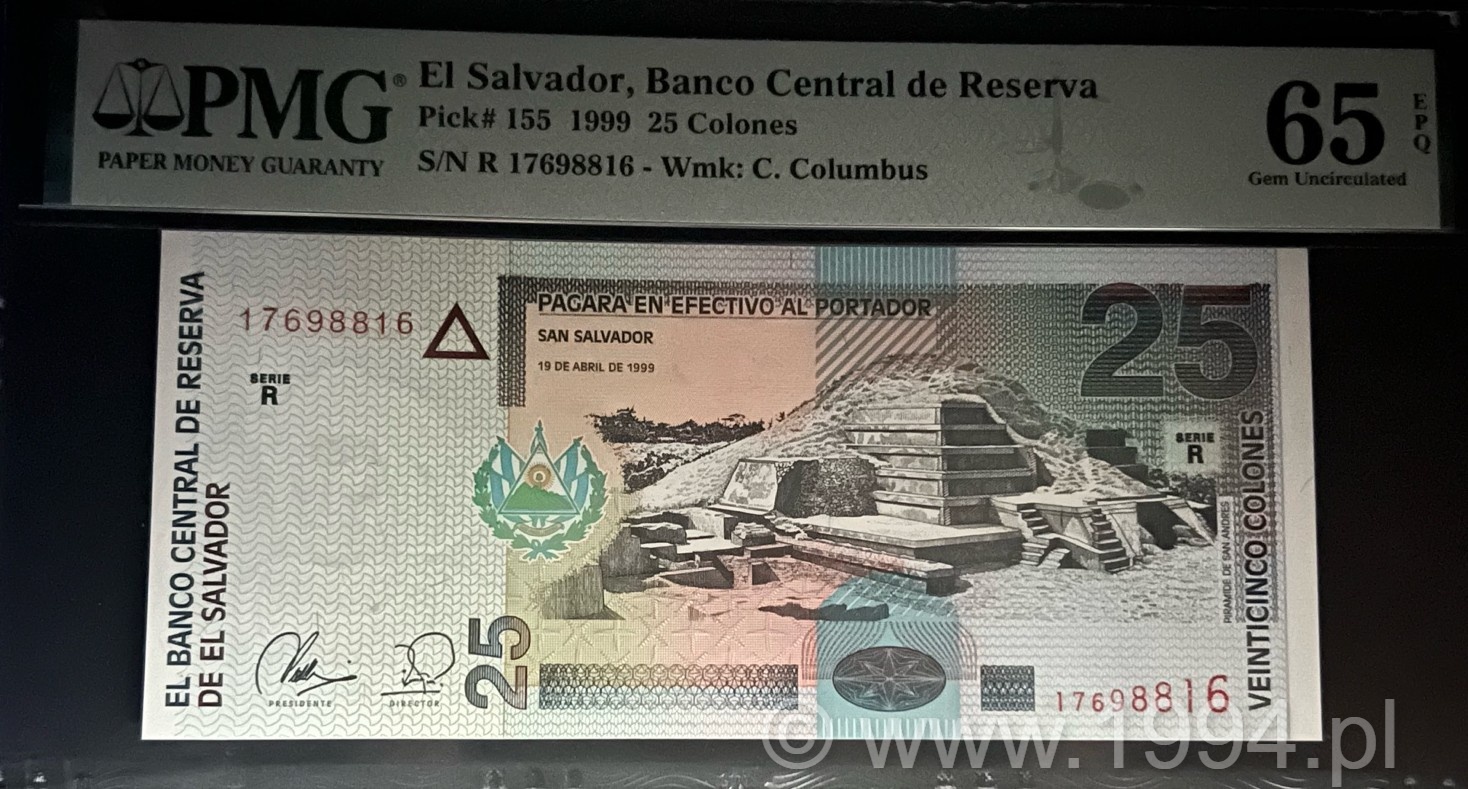
Catalogued as Pick 155 and graded PMG 65 EPQ Gem Uncirculated, this issue represents the terminal stage in the 1996–1999 series that began with the Pick 149a introduction. Read more →
Graded PMG 64 Choice Uncirculated, this example concludes the 1996–1999 De La Rue sequence, connecting the proof (Pick 149p) through issued and specimen forms (149a–155s). Read more →
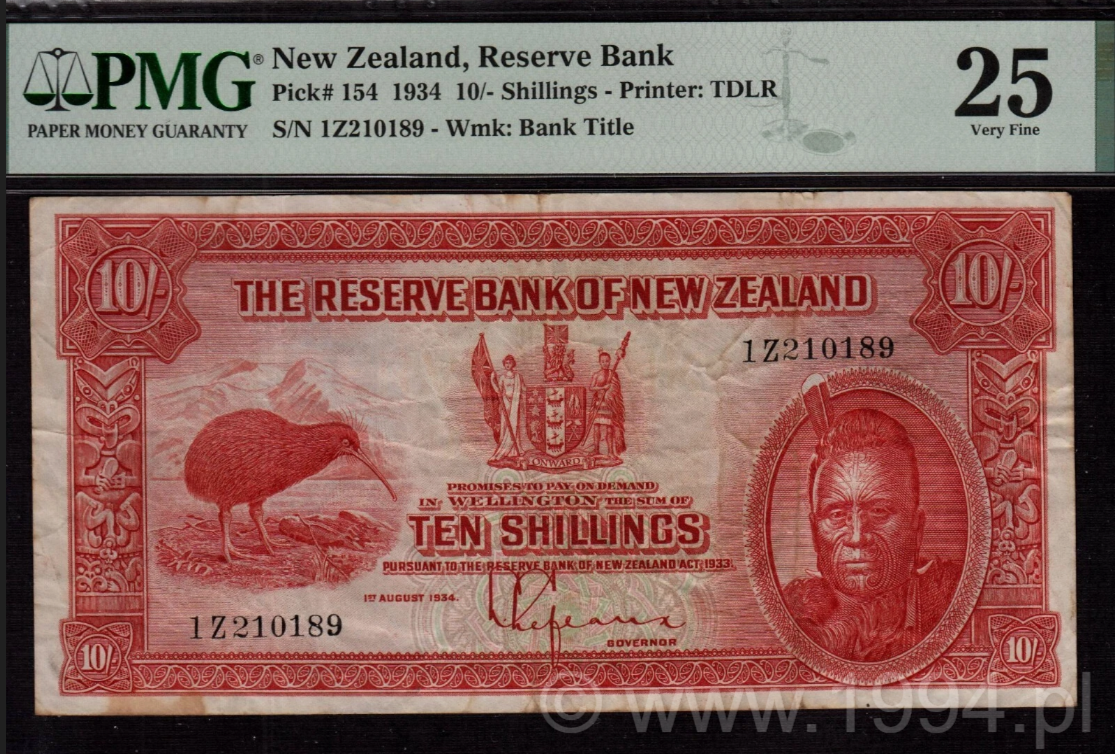
The note belongs to the inaugural Reserve Bank series commonly known as the "Lefeaux series", named for Leslie Lefeaux, the institution’s first Governor. Prior to 1934 New Zealand’s paper money had been issued by private trading banks. The establishment of the Reserve Bank introduced a unified national currency system, and the new banknotes were commissioned from Thomas De La Rue & Company Limited in London, one of the world’s leading security printers. Read more →
Catalogued as Pick 154 and graded PMG 25 Very Fine, this example represents a circulated survivor of the first national Reserve Bank issue and provides a direct link to the moment when New Zealand transitioned from private bank currency to a unified state-issued monetary system. Read more →
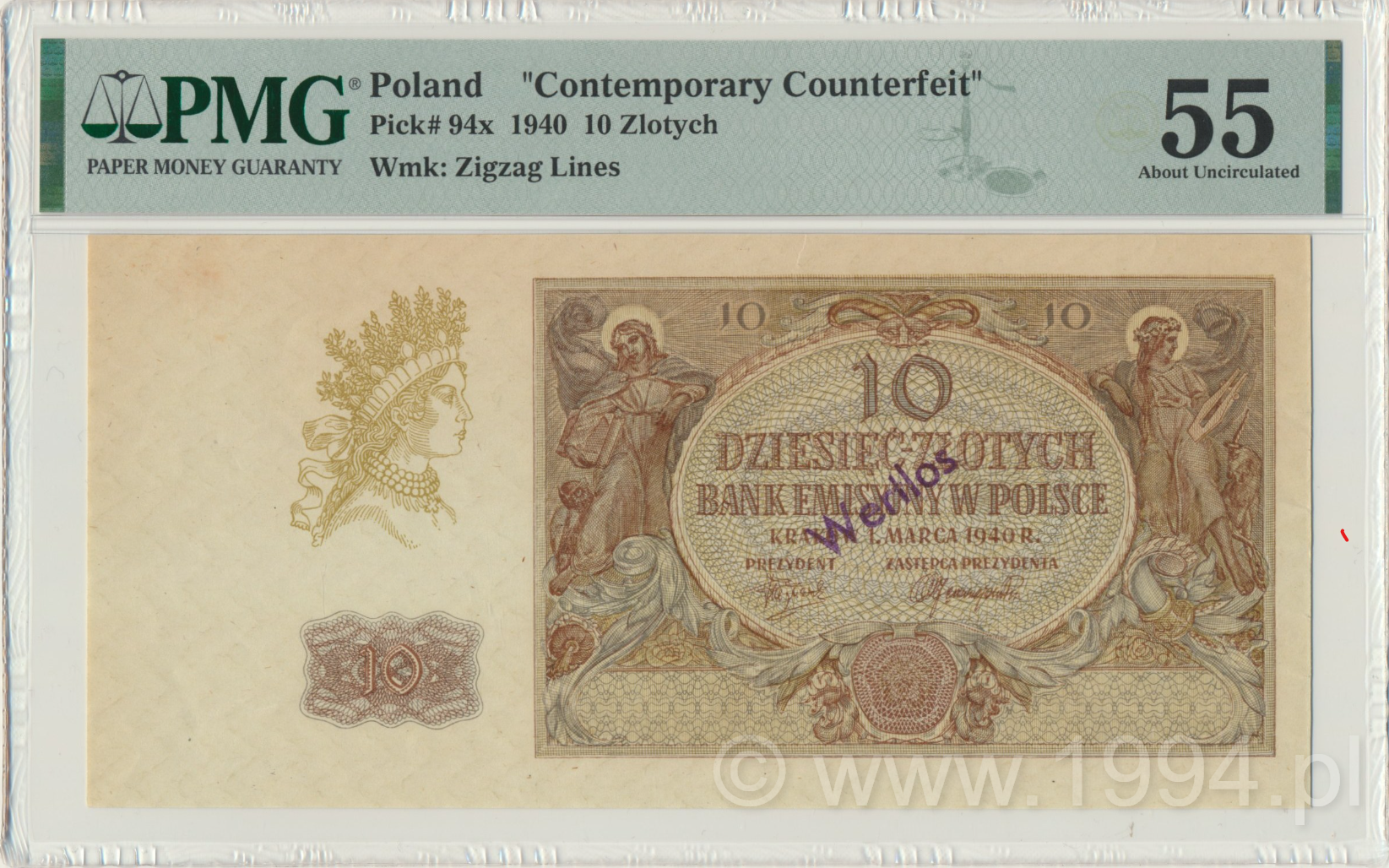
Referenced in Miłczak 94 and absent from the Lucow collection, it remains a rare survivor from the shadow economy of occupied Poland. Read more →
Engraved admission ticket for the 1948 Republican National Convention, held June 21–25 at Philadelphia’s Convention Hall. Produced by the E.A. Wright Bank Note Company, a leading Philadelphia security printer, this ticket fuses political spectacle with the visual language of currency. E.A. Wright-renowned for engraved stock certificates, checks, and early banknotes-applied its full security printing repertoire to this design, lending an air of gravitas and authenticity to an event that sought to project national confidence in the postwar years. Read more →
The 10 Złotych dated 1 March 1940 was among the first banknotes issued by Bank Emisyjny w Polsce, the German-controlled issuing bank established in the General Government during the occupation of Poland. Printed by Giesecke & Devrient in Leipzig, the issue entered circulation in 1940 as part of the currency system introduced for the occupied territory. Read more →
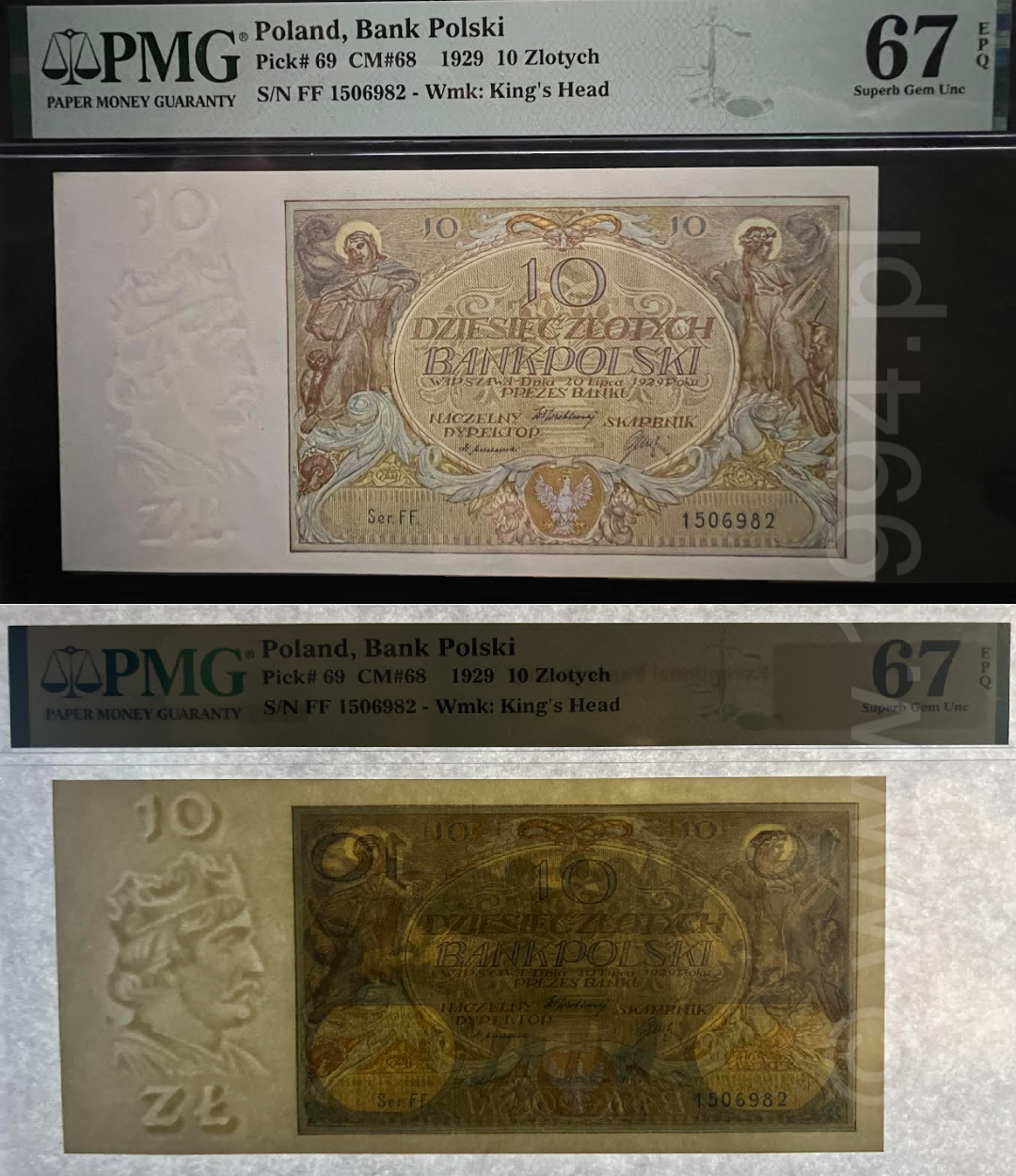
The 10 Złotych dated 20 June 1929 completed Bank Polski’s first modern post-stabilization currency series. Designed in Warsaw and printed by PWPW (Państwowa Wytwórnia Papierów Wartościowych), it brought a balanced Art-Deco neoclassical aesthetic that symbolized the Second Polish Republic’s recovery after early-1920s hyperinflation. Read more →
Blank paper stock prepared for the 1926 10 Zlotych issue, classified by PMG as Watermarked Paper. Read more →
The design combines blue-grey engraving with a warm brown underprint. Acanthus ornament, intricate guilloche work, corner denomination panels, and a distinctive repeating border surround the principal elements. An unprinted oval field at right contains the profile watermark of Tadeusz Kosciuszko, joining the patriotic subject of the engraved portrait with the note's principal paper-security feature. Read more →
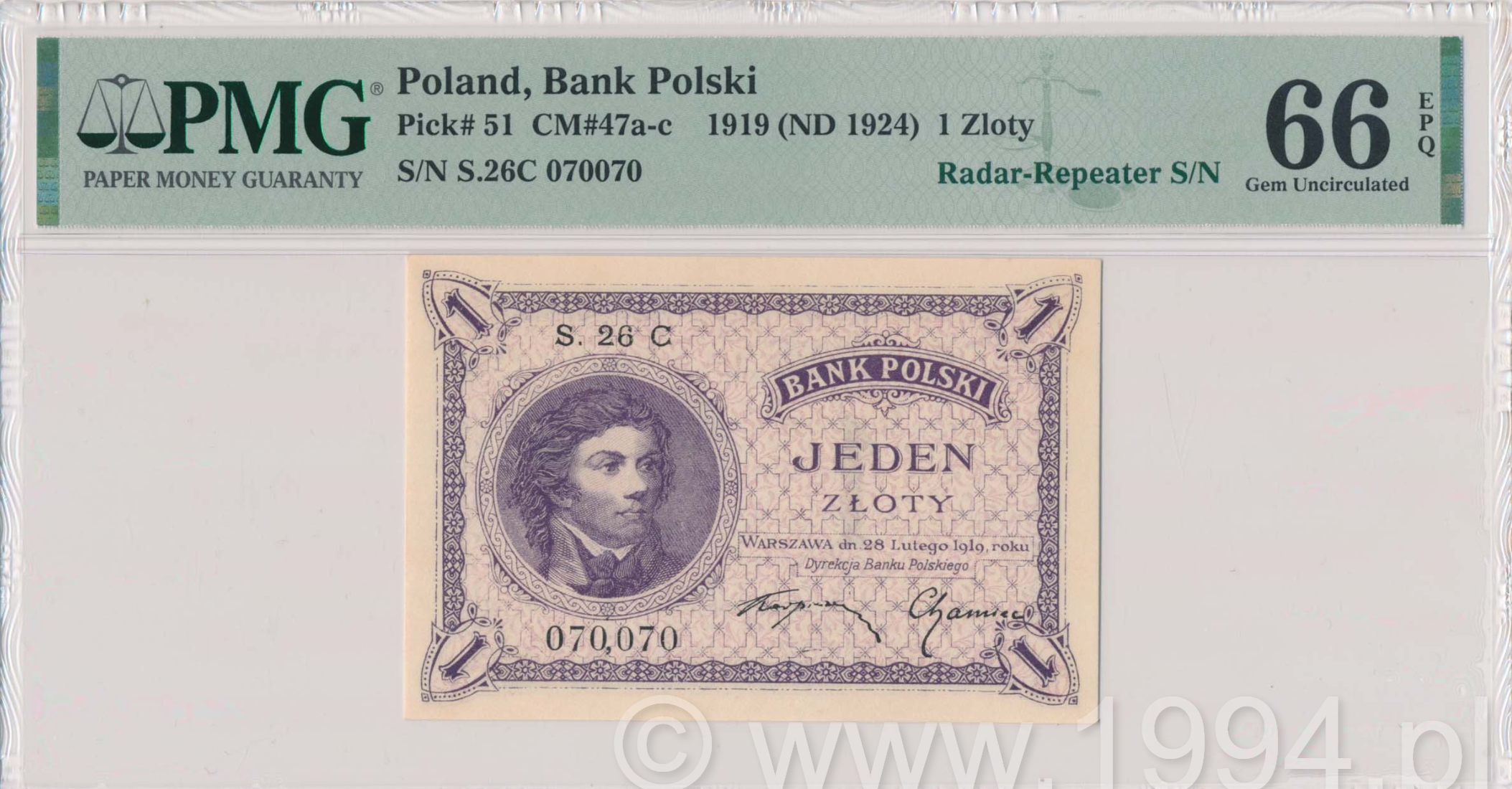
The face presents a portrait of Tadeusz Kosciuszko within a circular engraved medallion at left. The Bank Polski title appears prominently above the denomination, while the date and printed signatures occupy the lower central field. Dense geometric ornament, fine guilloche work, and repeated corner denominations create a compact design suited to the lowest value in the inaugural series. Read more →
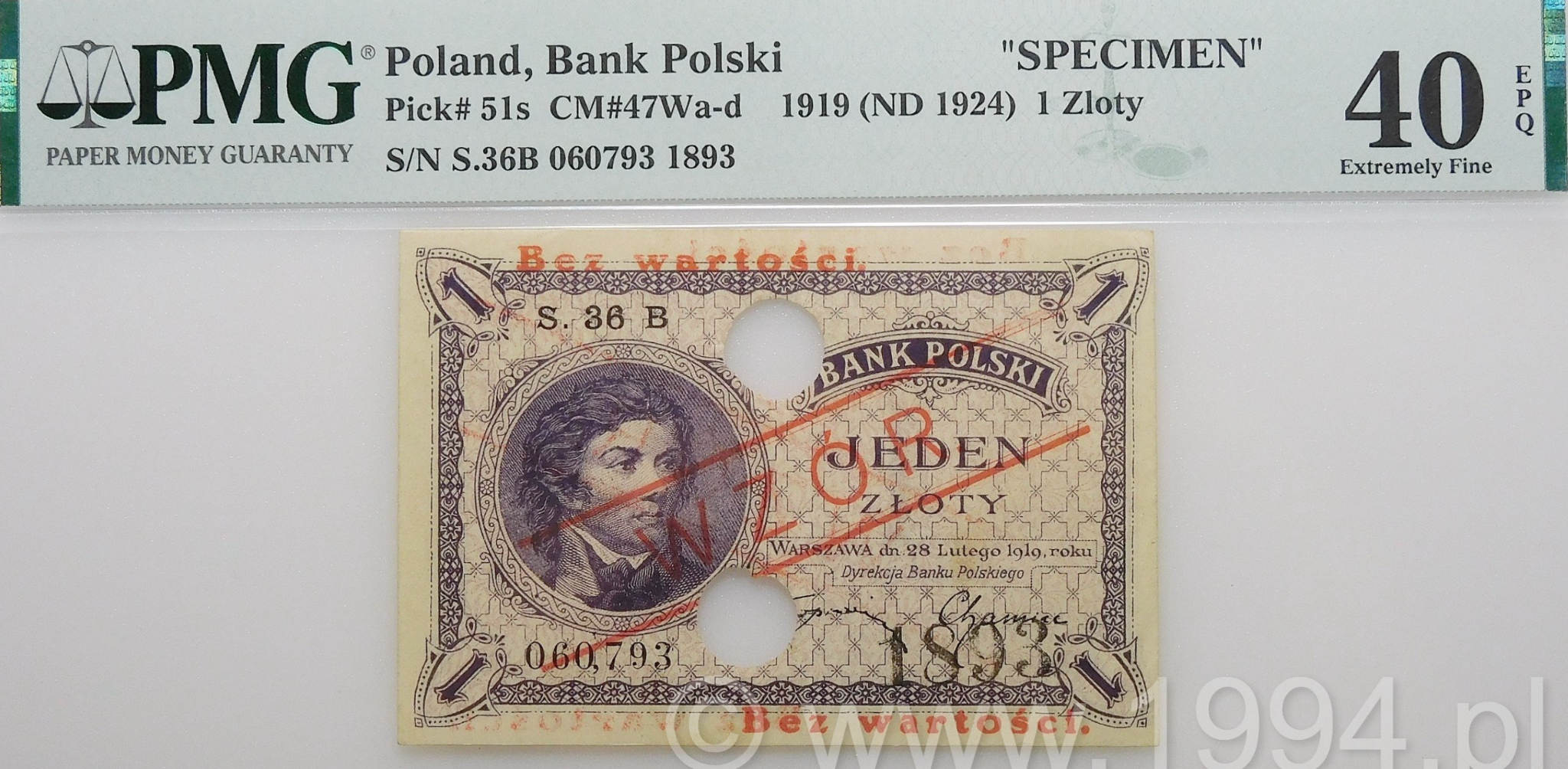
The specimen markings are applied in red across the printed design. WZÓR. appears diagonally across the face, while Bez wartości. is positioned along the upper and lower margins. The reverse carries corresponding specimen markings, establishing the note as a bilateral overprint specimen rather than a regular issued example. Read more →