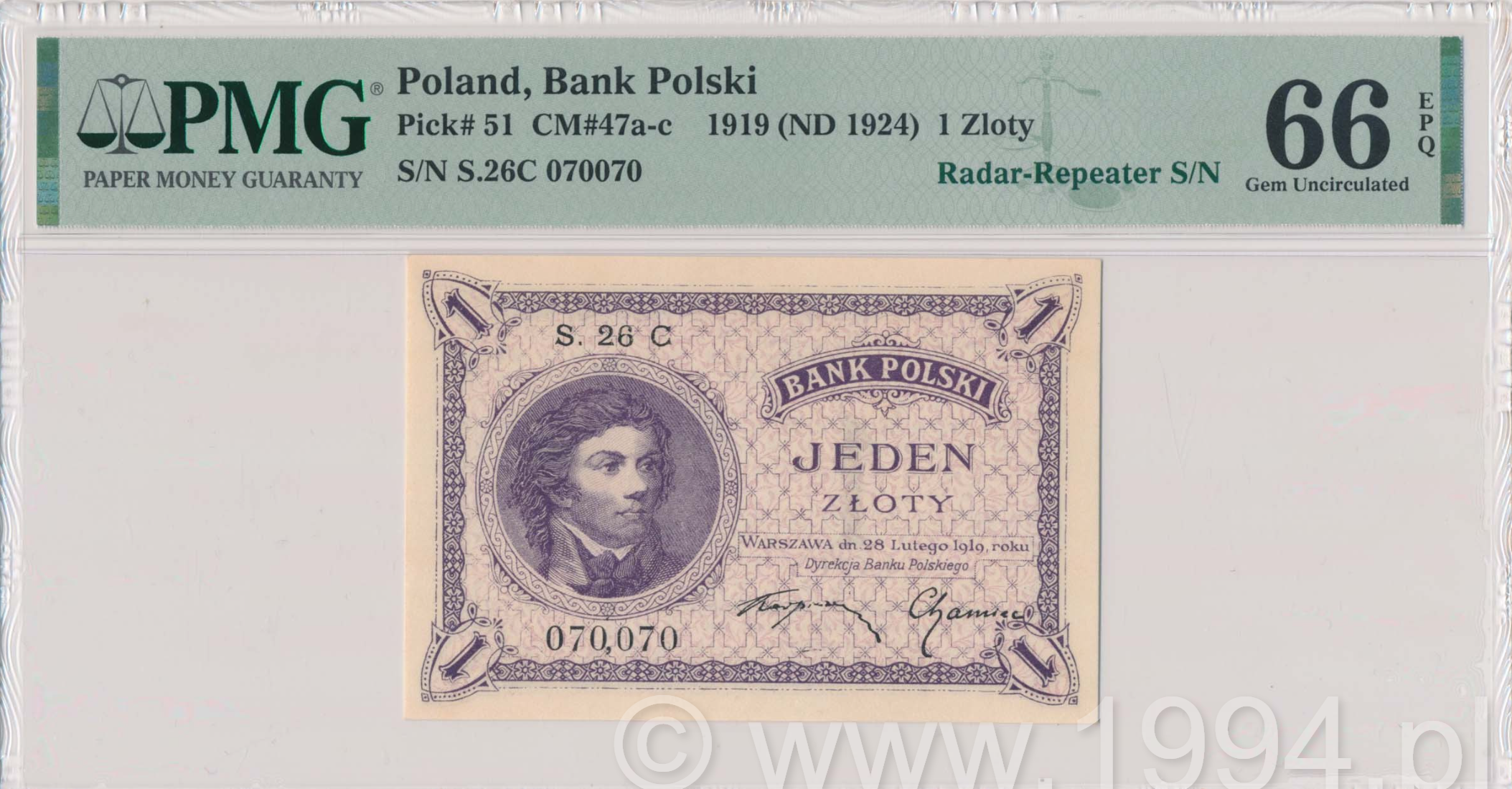
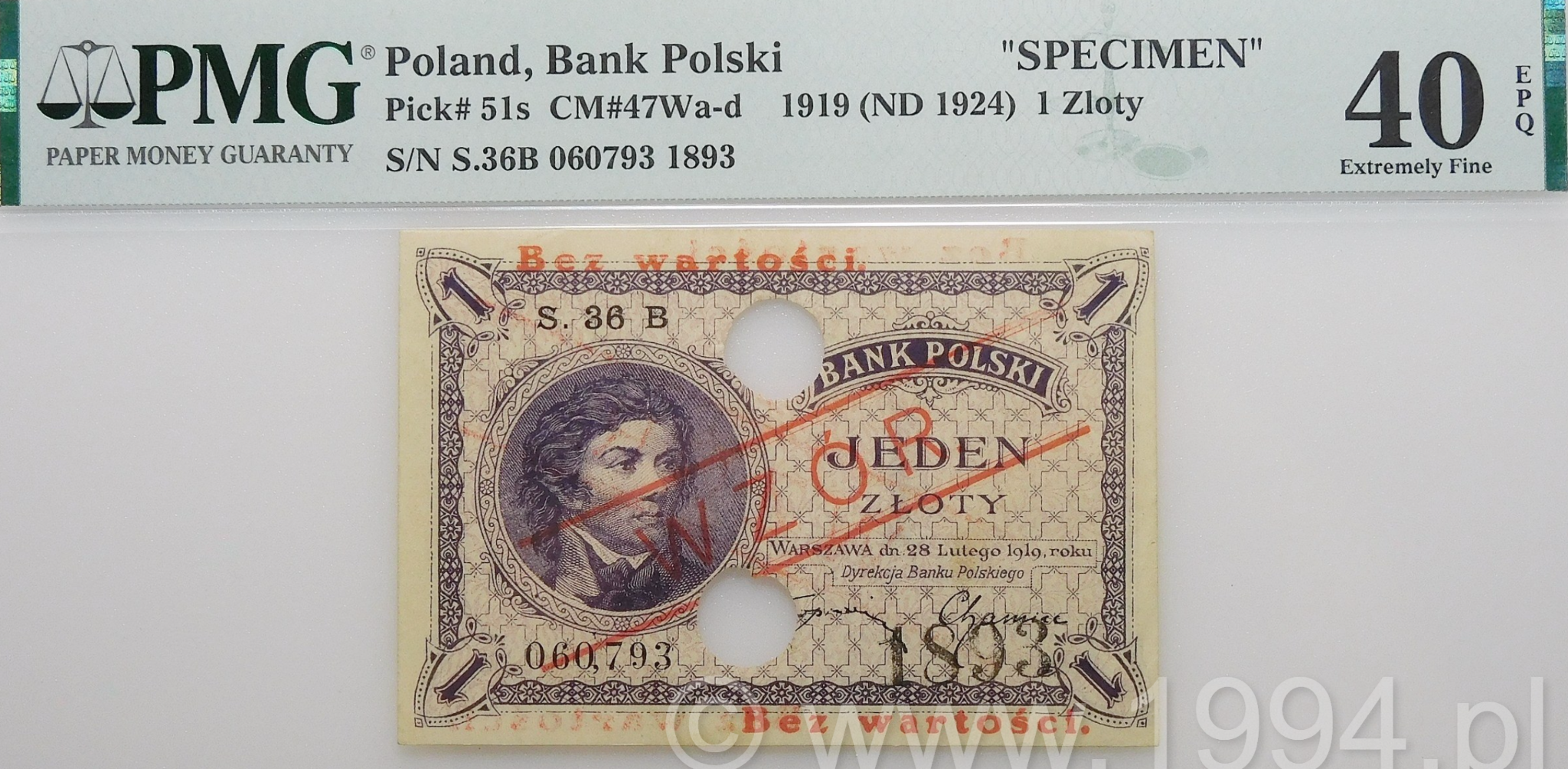
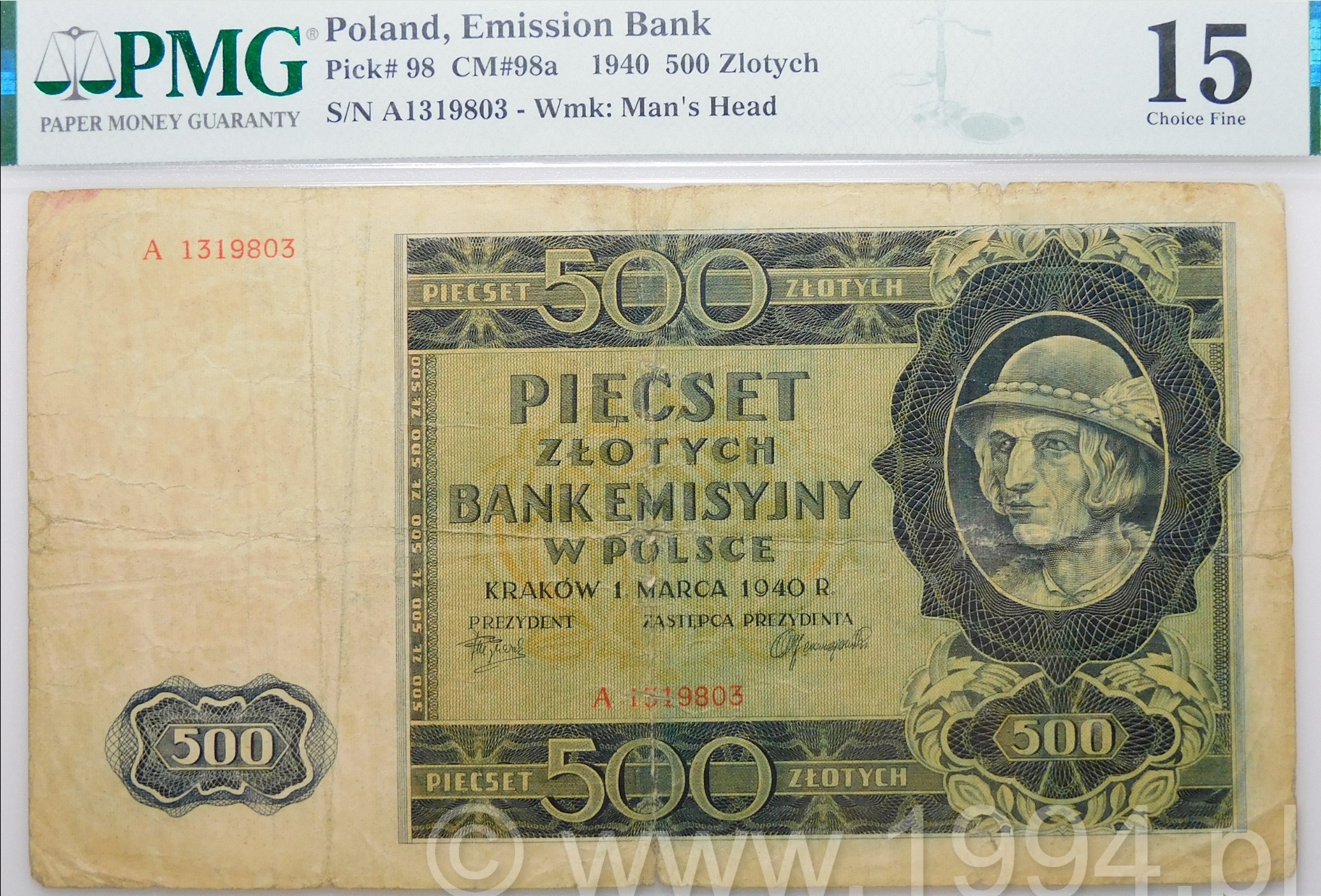
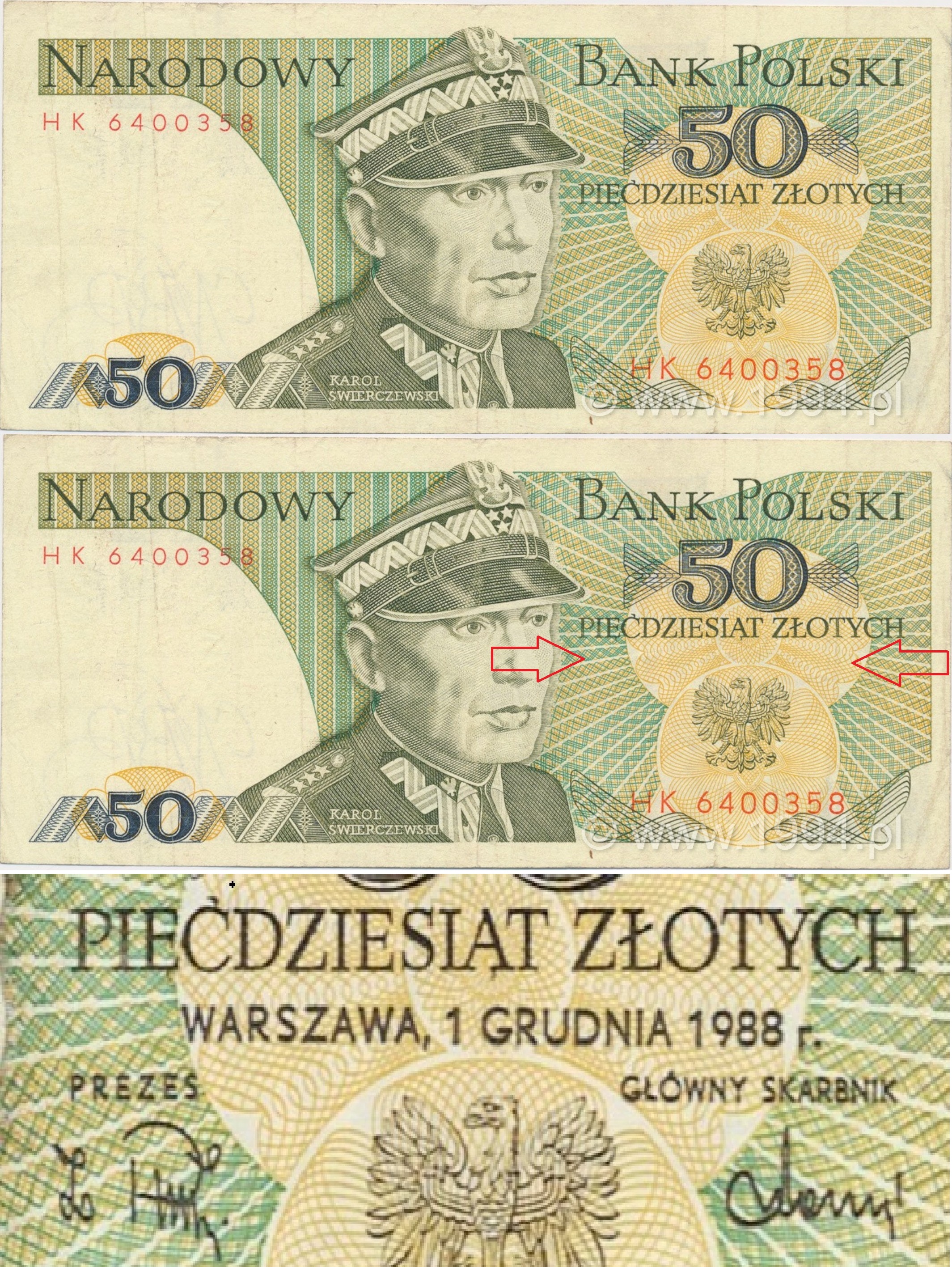
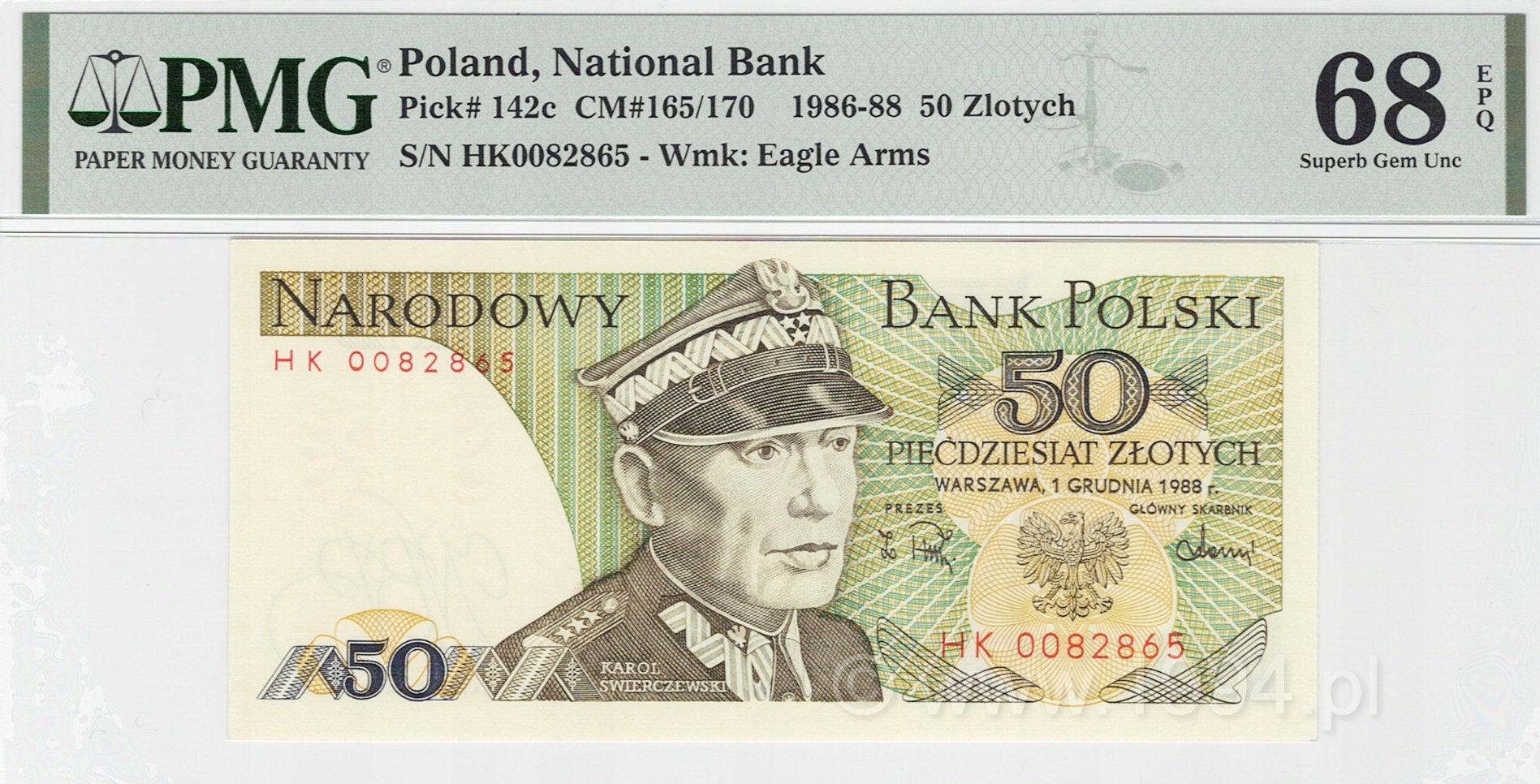
Poland’s paper money reflects a nation repeatedly redefining itself through independence, conflict, reform, and renewal. The rebirth of the Polish state after 1918 found its monetary expression in the 1919 zloty issue, printed in London by Waterlow & Sons. The 1 zloty note bearing Tadeusz Kościuszko became the emblem of that moment, a circulating symbol of sovereignty whose well-preserved survivors are today scarce. The 100 zlotych Kościuszko note served as a higher working denomination and was subjected to heavy circulation, leaving few examples intact. At the upper end, the imposing 1000 zlotych note illustrates the ambition of the early Polish monetary system: fully designed and printed, yet never released into circulation.
The interwar period brought rapid advances in design, engraving, and printing. Banknotes such as the 1936 Dąbrowski 50 zlotych represent a mature artistic language that was abruptly interrupted by the outbreak of World War II. Alongside circulation issues, non-circulating material from this era — including remainders and approval-stage prints — preserves production details that are largely absent from worn circulation survivors. These materials form an essential documentary layer within Poland’s numismatic record.
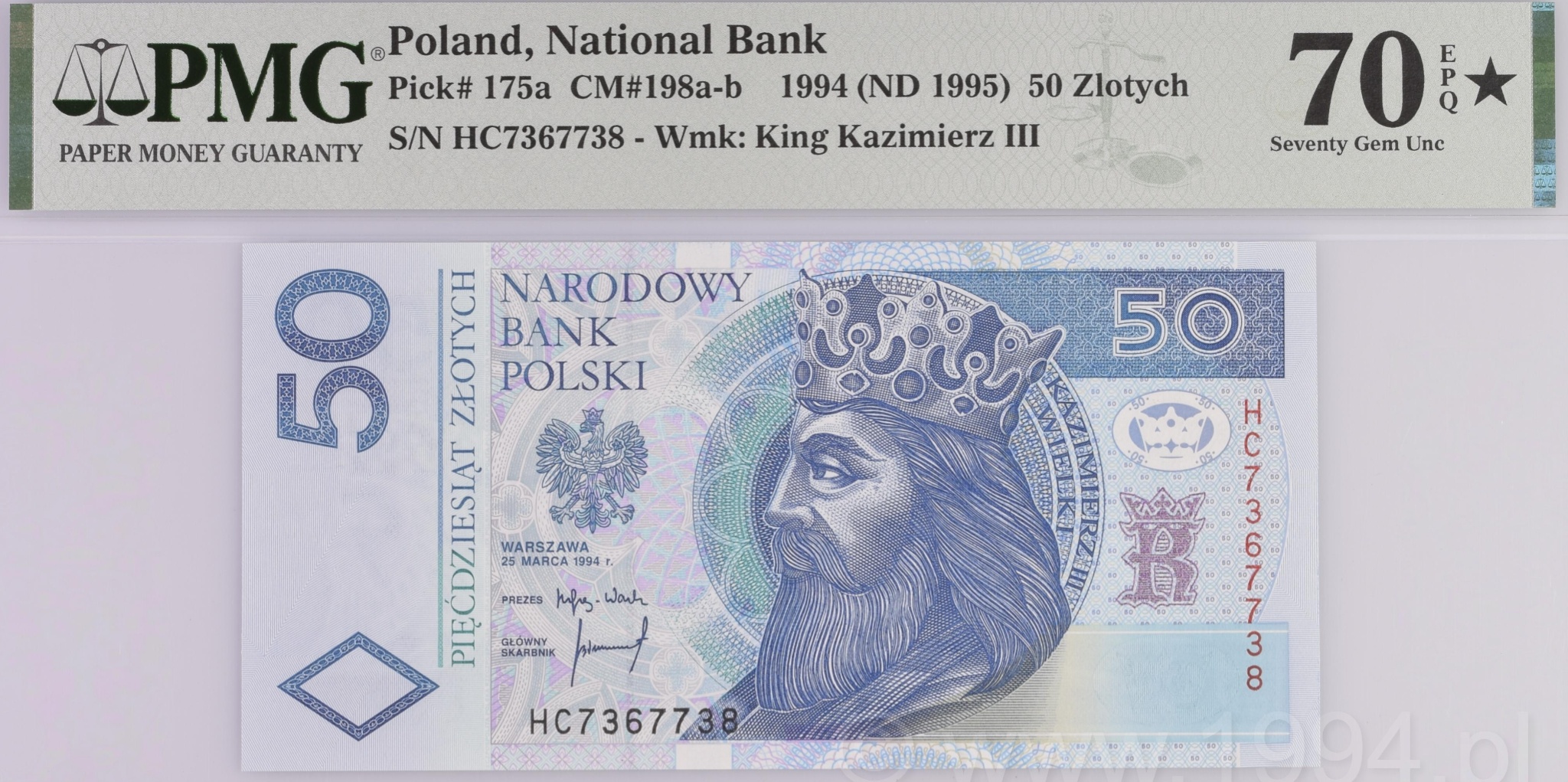
A distinct and technically well-documented chapter emerged with the introduction of the 1994 zloty series, the foundation of Poland’s modern currency. Produced as a tightly defined, one-cycle project and completed before circulation began in 1995, the series was printed jointly by Thomas De La Rue (London) and PWPW (Warsaw). Unlike long-running emissions subject to incremental revisions, the 1994 issue can be reconstructed today as a closed production process, supported by surviving pre-circulation material.
Within this process, the same banknote design existed in several clearly differentiated control forms, each tied to a specific production function. These include unmarked approval notes confirming final design and security features; reference notes bearing red WZÓR overprints (PWPW) or SPECIMEN markings and stamps (TDLR) intended for institutional distribution; and a final archival form permanently invalidated by perforation reading SPECIMEN OF NO VALUE. These forms do not represent collectible “variants” in the modern sense, but successive technical stages documenting the pathway from approval to archival closure.
Standard catalogs record only part of this structure, largely confined to the most visible approval and reference forms. Preserved material demonstrates, however, that the same production logic was applied beyond a single prefix or denomination. The
50 zlotych note with AR prefix,
documented here as a complete approval–reference–archival sequence, serves as a concrete illustration of this broader pattern. Its role is evidentiary rather than exceptional: it shows how the control framework observed in the reference prefix extends across different production runs within the 1994 emission. A detailed technical breakdown of these production-stage forms is presented in the
Spotlight study on the four documented control types of the 1994 issue,
which situates these examples within a fully reconstructed production sequence.
Taken together, these episodes — from the 1919 Kościuszko issues and interwar design achievements to the rigorously structured 1994 production process — demonstrate how Polish banknotes function not only as instruments of payment, but as durable records of statehood, design intent, and printing practice. Preserved today in institutional and private archives, they form a continuous narrative in which circulation issues and non-circulating control material are equally essential to understanding Poland’s monetary history.