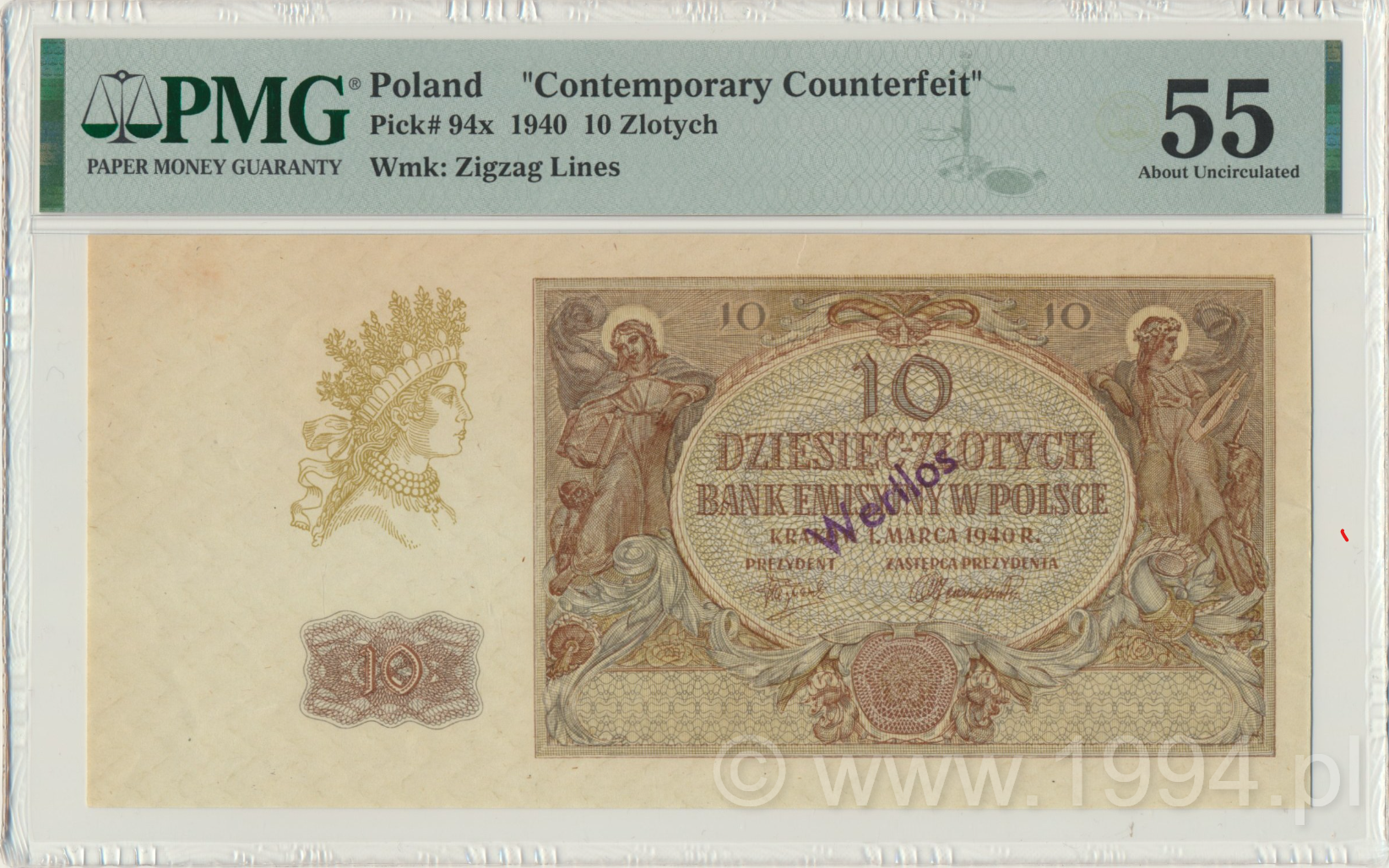
Poland 1940 - 10 Zlotych Contemporary Counterfeit with WERTLOS Stamp (Pick 94x)
Referenced in Miłczak 94 and absent from the Lucow collection, it remains a rare survivor from the shadow economy of occupied Poland. Read more →
Tickets of this type were printed in serially controlled lots, with each seat assignment engraved and overprinted separately. Surviving examples with matching coupons and intact perforations are rare, as most were collected at entry and destroyed. This complete guest pass-unused, with both stubs attached-provides a rare record of mid-century American political design. Read more →
This undated '10 ZŁ' watermark became the standard form for circulation and differs from the much rarer experimental '992–1025' dated watermark used on Pick 65br remainders. The plain watermarked paper such as this is considered an intermediate stage between the 1926 trial materials and the fully issued 1929 Pick 69 notes, which adopted the same watermark in mass production. Read more →
The notes were printed in London by Waterlow & Sons Limited and held in reserve while the Polish marka remained the circulating currency. This 1919-dated issue entered circulation on 28 April 1924, when the new zloty was introduced and Bank Polski began operations as the central issuing institution. The delayed release connects the note directly with both the restoration of Polish independence and the stabilization of the national currency after the marka hyperinflation. Read more →
Though technically an unissued type, the 1000 złotych is one of the most coveted of the 1919 notes. Survivors are few, and most show heavy folds or restoration. This example, graded PMG 63 EPQ, is a choice survivor combining originality, vibrant inks, and paper integrity - a rare high-grade representative of Poland’s monumental early złoty design and a cornerstone of any serious interwar collection. Read more →
The paper is of the same type as the original issue, including watermark, underscoring the sophistication of the operation. Such workshop remnants rarely survive, as they were typically destroyed once full notes were completed or abandoned. This example is preserved in a descriptive PMG holder (labeled 'Printing Remnants'), without an assigned numeric grade. By appearance, it remains close to original emission quality, showing crisp paper and fresh inks with no obvious circulation wear. Read more →
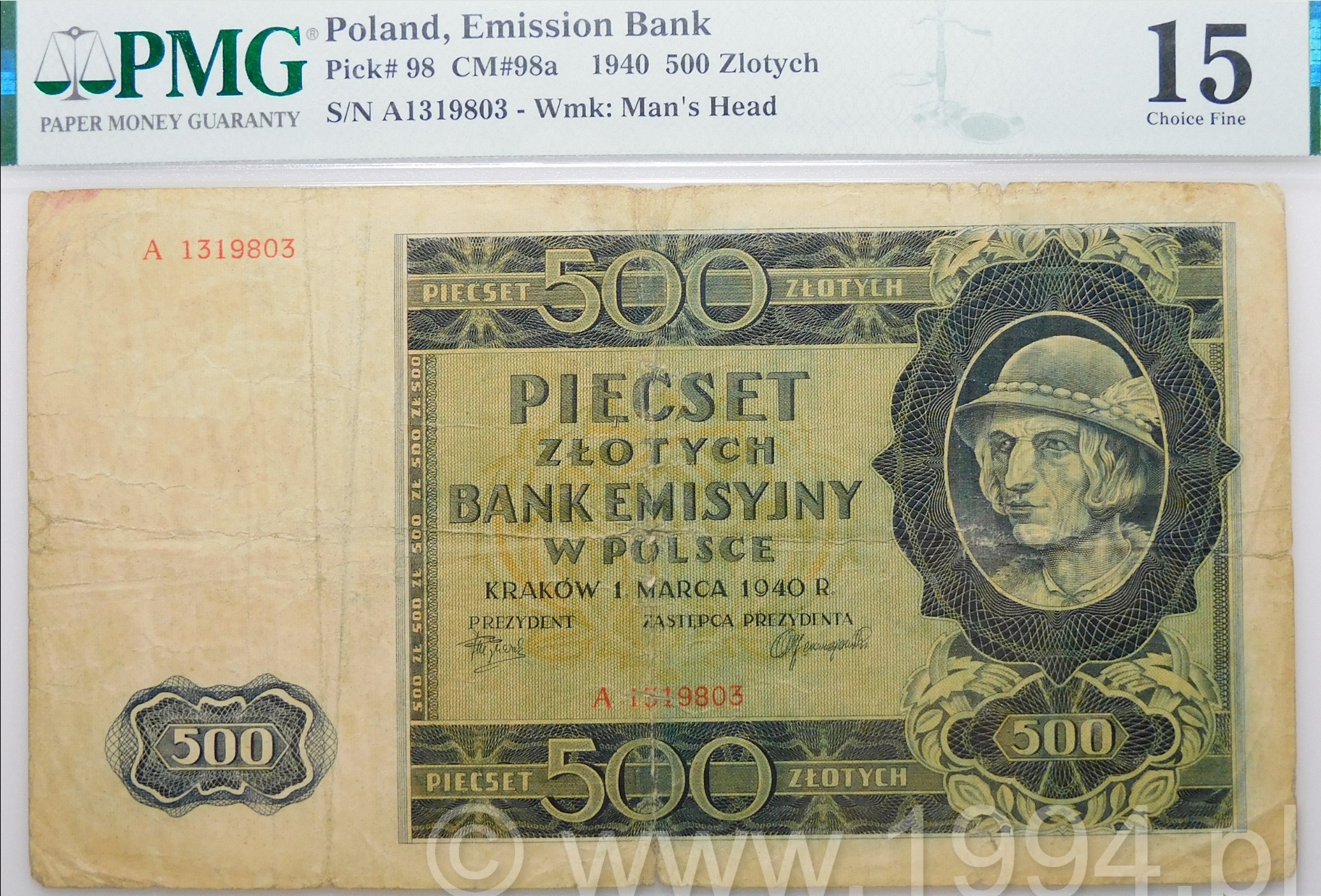
Original 500 złotych note of 1 March 1940 issued by the Bank Emisyjny w Polsce, Series A, serial A 1319803. Although the banknote itself is genuine, its serial falls within the 13xxxxx numbering range later associated with diversionary forgeries of the 500 złotych denomination. Together with the 12xxxxx sequence, these numbers became compromised by the appearance of counterfeit notes, making A 1319803 an extremely rare surviving original from a range subsequently targeted for withdrawal. Read more →
20 złotych dated 1 March 1940, issued under the Bank Emisyjny w Polsce during the German occupation, here from Series N - a rarer subtype known as the 'WWII London Counterfeit' (LC). This variety is recognized by its distinct olive-toned underprint, setting it apart from the more common genuine emissions. PMG has described this piece as a diversionary counterfeit, aligning it with the series of clandestine productions created to destabilize the wartime Polish economy. Read more →
Certified by PMG as Choice Uncirculated 63, this example preserves sharp typographic detail, intact embossing, and a fully legible watermark, making it an outstanding representative of a denomination that rarely survives outside of circulated condition. Read more →
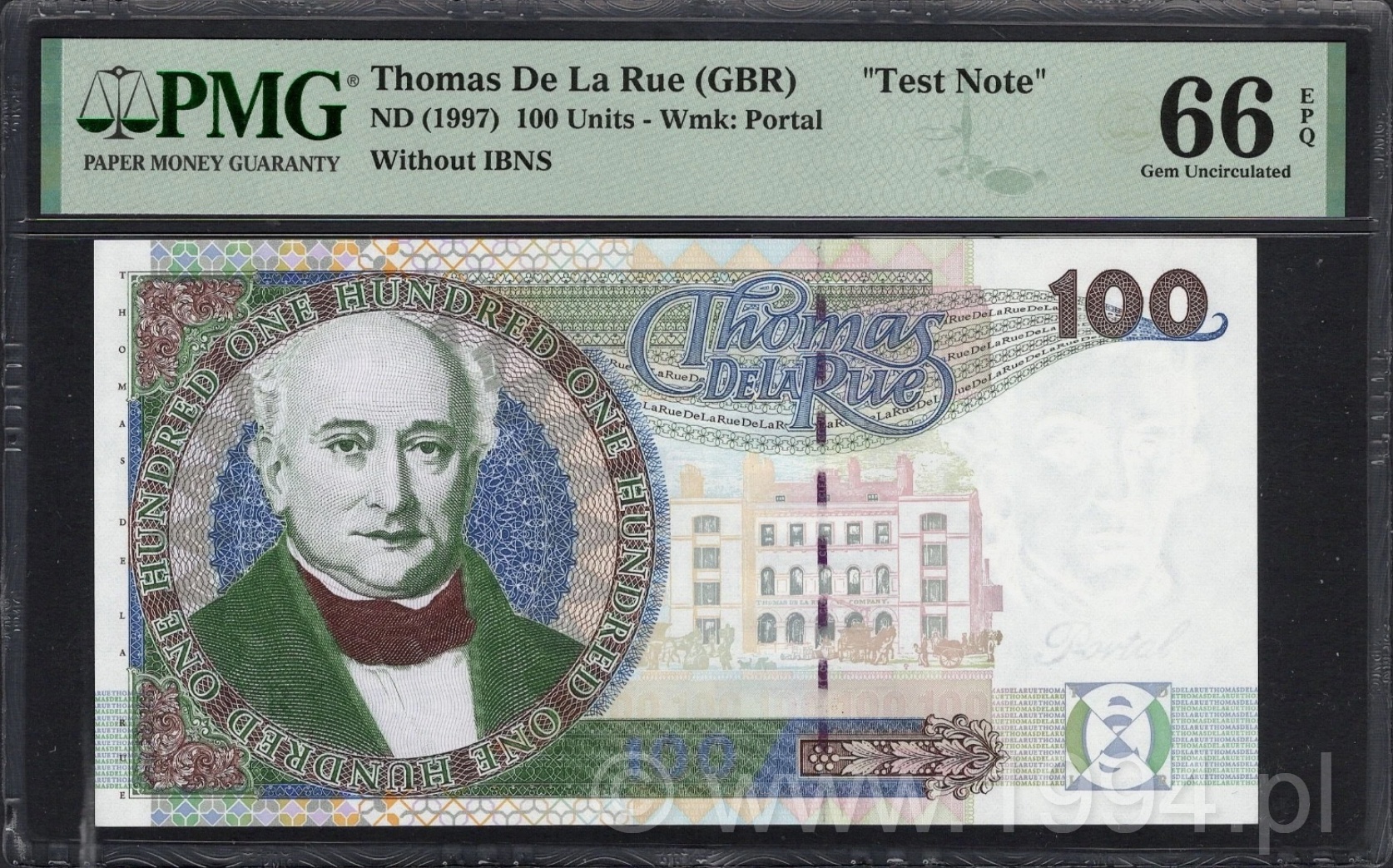
A rare Thomas De La Rue test note, issued as a demonstration piece rather than circulating currency. Dated ND (1997), this 100 Units note was printed to showcase De La Rue’s advanced banknote security design, incorporating microtext, guilloche patterns, and the portal watermark. The obverse features a portrait of Thomas De La Rue with multicolor lathework and the company’s headquarters vignette. Test notes like this were produced for presentations, sales demonstrations, and security trials, not for public issue, and remain highly sought after by collectors. Read more →
With fewer than five graded examples known, this PMG 63 Choice Uncirculated note stands among the rarest survivors. Placed beside the 1862 specimen, it completes the story-the specimen representing approval, the remainder preservation. Two different paths, one design, both critical to understanding how Uruguay’s first modern banknote was born and survived. Read more →
Replacement notes such as this are among the rarest 2005 Northern Bank issues. The 'YY' prefix was reserved for internal control and used only when a regular production sheet was damaged or spoiled during printing. Fewer than a few thousand replacement £50s are estimated to have been released, making this an exceptional survivor of Northern Ireland’s most infamous banking episode. Read more →