East Caribbean States 2019 - Central Bank 10 Dollars (Pick Unlisted)
Issued 10 Dollars note from the East Caribbean Central Bank (ECCB), dated 2019 and printed on polymer substrate by De La Rue. Read more →
The reverse honors Saint Lucian economist Sir Arthur Lewis, continuing the ECCB’s tradition of highlighting prominent Caribbean figures. Blue and violet tones dominate the design, symbolizing trust and financial stability, while the vertical orientation reflects new global trends in banknote layout. Read more →
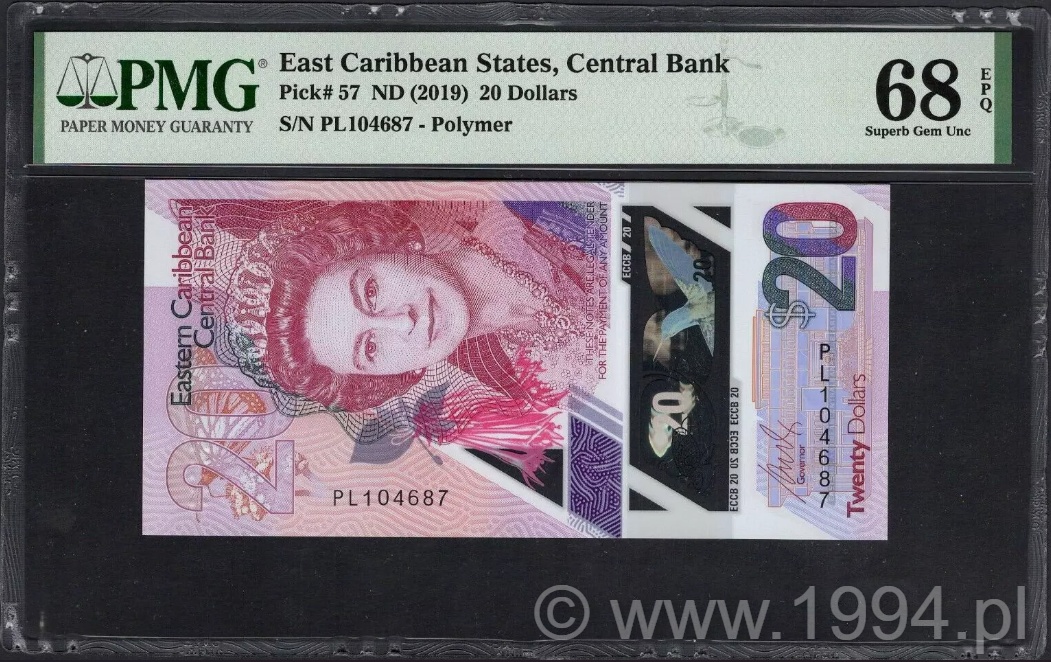
Issued 20 Dollars polymer note from the East Caribbean Central Bank, dated 2019 and printed by De La Rue. Read more →
This denomination forms part of the ECCB’s new polymer banknote family introduced in 2019 to replace paper issues across the Eastern Caribbean Currency Union. The front carries Queen Elizabeth II’s effigy, the ECCB headquarters, and advanced polymer security windows integrated vertically within the design. Read more →
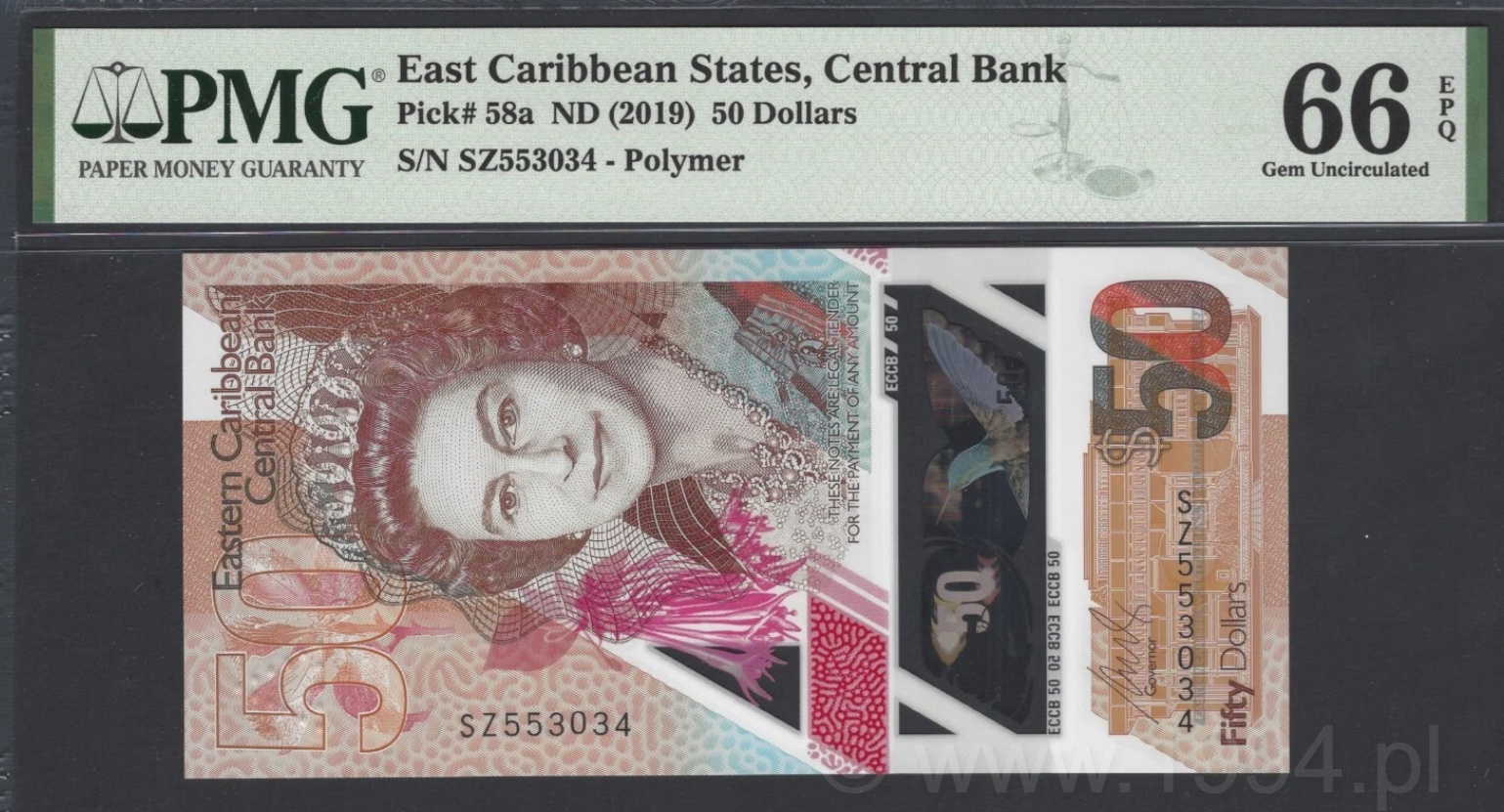
This unlisted 50 Dollars marks the transition of the highest ECCB denomination to polymer, representing the region’s modernization of currency durability and security. Graded PMG 65 EPQ Gem Uncirculated, it captures the first release state before formal listing and provides an essential reference for specialists tracing ECCB issue chronology. Read more →
Graded PMG 66 EPQ Gem Uncirculated, this catalogued issue reflects the full adoption of polymer substrate technology across the ECCB’s 2019 banknote family. It stands as the definitive version following the short-lived unlisted release, now serving as the benchmark example for collectors of modern Caribbean currency. Read more →
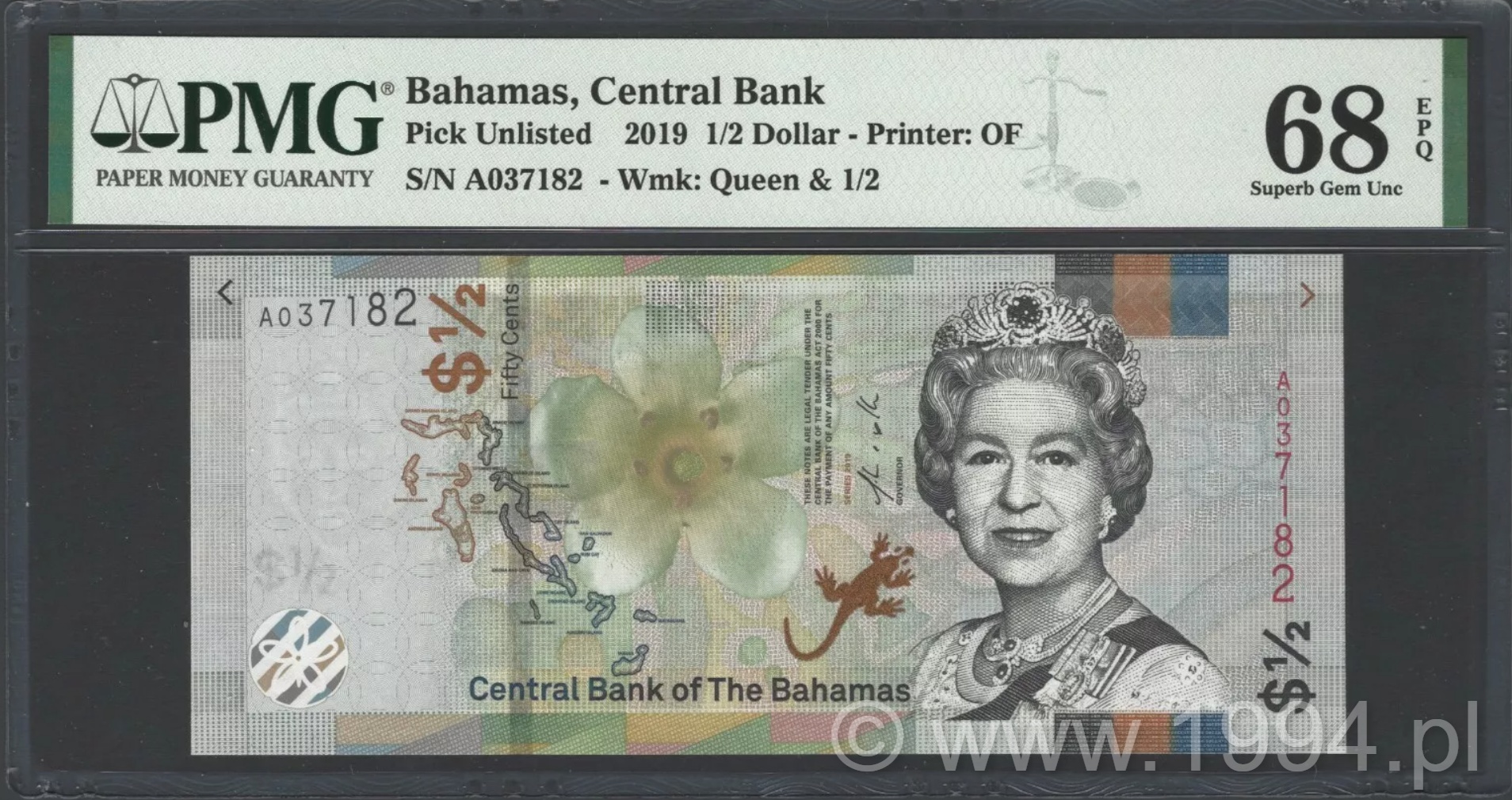
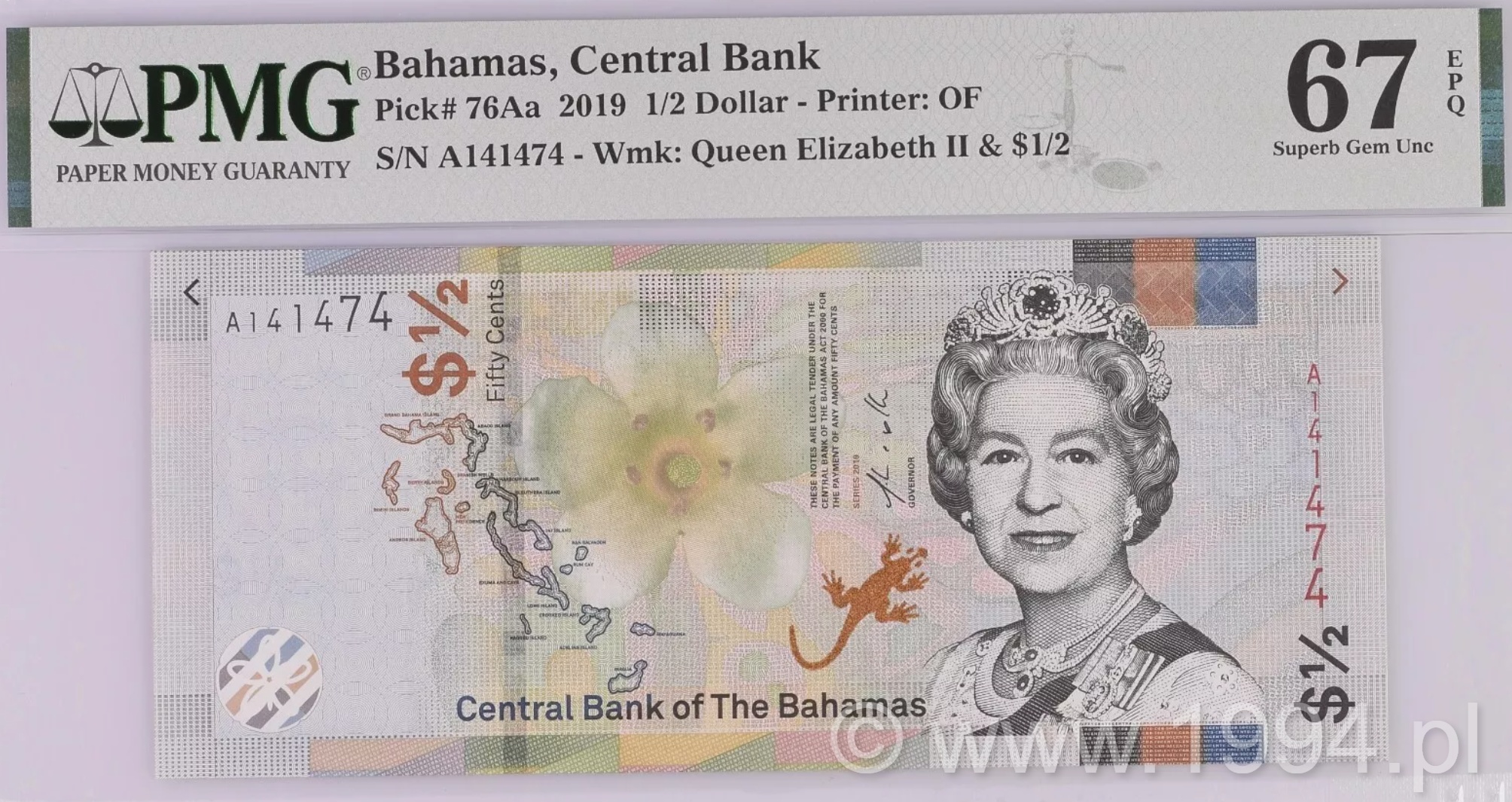
The Bahamas introduced the CRISP (Counterfeit Resistant Integrated Security Product) series in the mid-2000s as part of an ongoing modernization of its currency. The 2019 issue marked the completion of the redesign, emphasizing polymer-style security elements, microtext, and color-shift features while retaining the national symbols and maritime themes that define Bahamian design. Read more →
The 2019 CRISP Evolution release consolidated earlier printings that had circulated under provisional catalog numbers, such as the prior 'Pick Unlisted' entry now formalized as 76Aa. The Central Bank’s initiative emphasized secure yet visually distinctive design, blending traditional Caribbean color palettes with the technical expertise of European security printers. Read more →
During the 1960s, Brazil’s currency authorities frequently requested printer samples to refine the national identity of Tesouro Nacional issues. Such 'Valor Legal' tests were part of that process, functioning as mock-ups for the placement of statutory wording required on all circulating paper money. These were not design proofs for a specific note but exercises in proportion and composition, testing the visual hierarchy of textual elements. Read more →
These tests were part of internal quality control during Brazil’s mid-century transition to mechanized numbering systems. Each prefix element carried specific meaning: 'Estampa' referred to the plate version, 'Série' to the batch, and the lowercase suffix to alignment spacing. Trials like this ensured accurate serial alignment and legibility-critical for security and accounting once live notes were printed. Read more →
Proofs like this one were pulled directly from steel plates to check engraving depth, line clarity, and inking quality before full production. Mounted examples such as this represent the intermediate stage between master die approval and live-issue note printing. Read more →
Created amid Brazil’s shift toward a new Cruzeiro standard following inflationary adjustments and political transition, this proof embodies a period of modernization in both economic structure and banknote aesthetics. Surviving examples of such essays are seldom encountered outside institutional archives, and they provide critical insight into how mid-century design philosophy merged artistry with practicality in Brazil’s monetary evolution. Read more →